Wooden Versus Plastic High Chairs Compared
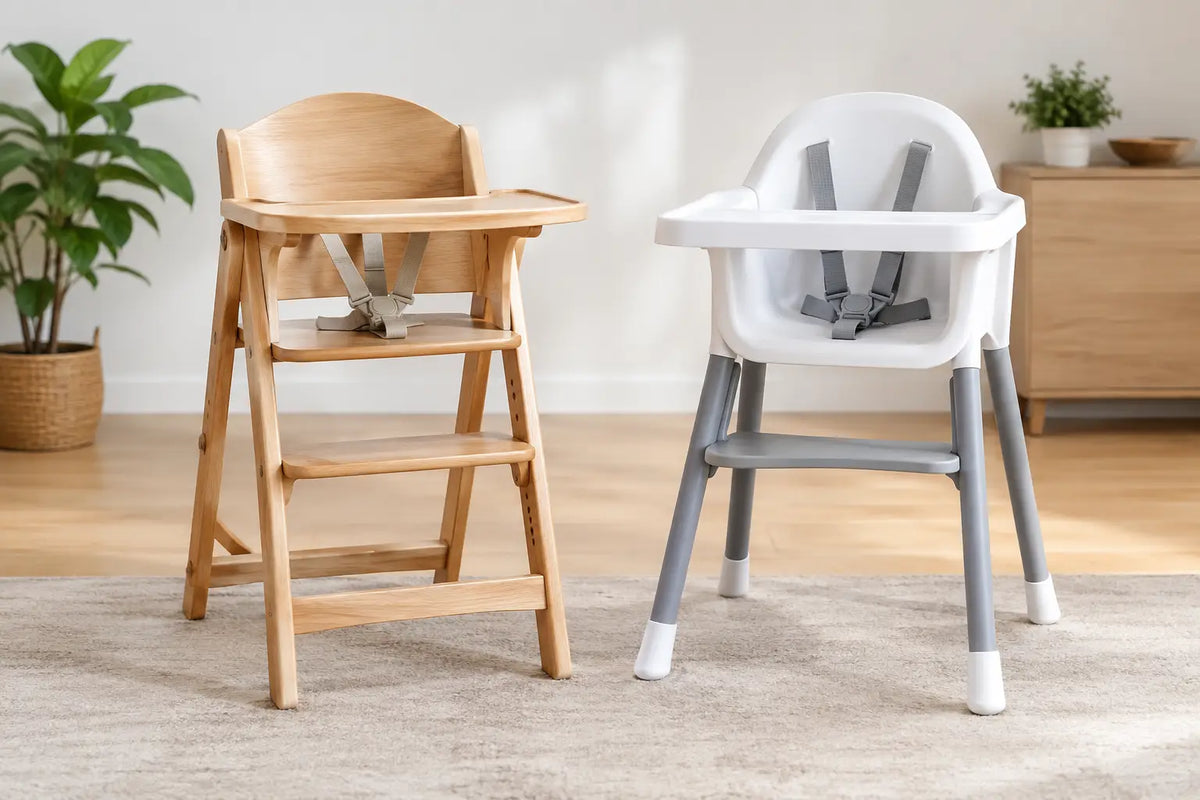
A high chair quickly becomes one of the busiest seats in the home. It holds breakfast porridge, first finger foods, craft-time crumbs and plenty of family mealtimes. When comparing wooden versus plastic high chairs, the best choice is rarely about appearance alone. It is about the chair that feels safe, suits your space and is realistic for the way your family eats, cleans and grows.
For some parents, a wipe-clean plastic chair makes daily feeding simpler. For others, a sturdy wooden chair that stays at the table for years offers better value. Both can be excellent choices when they have the right safety features and fit your baby well.
Wooden versus plastic high chairs: the main difference
Wooden high chairs are usually chosen for their solid build, timeless look and long-term use. They often sit comfortably alongside dining furniture rather than feeling like temporary baby equipment. Many adjustable wooden models can move from a baby high chair to a toddler chair, and sometimes continue as a useful seat for older children.
Plastic high chairs are often lighter, easier to move and designed around quick clean-up. They may include a removable tray, reclining positions, compact folding and padded inserts. This makes them especially appealing during the early weaning stage, when food has a remarkable ability to reach every surface within arm’s length.
Neither material is automatically safer or more practical. The details of the design matter more: a secure harness, stable base, sensible seating position and simple cleaning surfaces should lead the decision.
Safety comes before material
A high chair should feel stable when your baby moves, leans or pushes against the tray. Look for a wide base, secure locking parts if the chair folds, and a harness that holds your child comfortably in place. A five-point harness is particularly useful for younger babies who are still learning to sit steadily.
Check the recommended age, weight and height guidance from the manufacturer. Your baby should only use a high chair once they can sit with appropriate support, according to the chair’s instructions. Never rely on a tray alone to keep them in position, and never leave a child unattended in a high chair, even for a moment.
For wooden models, inspect the finish and construction. Surfaces should be smooth, with no splinters, cracks, loose screws or gaps that could trap small fingers. For plastic chairs, check that the moulded body, tray clips and folding mechanism feel firm rather than flimsy. In both cases, a chair should sit level on your floor without rocking.
A footrest is another feature worth prioritising. It gives your child a stable place to support their feet, which can improve comfort and posture during meals. This is especially helpful for baby-led weaning, when a settled and well-supported child can focus more easily on exploring food.
Why families choose wooden high chairs
Wooden high chairs bring a warm, furniture-like feel to a kitchen or dining area. If you have carefully chosen nursery furniture and want your feeding space to feel equally considered, wood can be a natural match. Neutral finishes also tend to work well as your home décor changes.
Their strongest advantage is often longevity. Adjustable designs can adapt as your baby grows by changing the seat and footrest height. Rather than storing a bulky high chair after a short stage, you may have a useful child-sized chair for years. For families planning for more than one child, a well-maintained wooden chair can be a particularly sensible investment.
Wood also has a reassuring sense of weight. A substantial chair is less likely to shift when an enthusiastic toddler wriggles at the table. That said, weight can be less convenient if you need to carry the chair between rooms or move it aside after every meal.
Cleaning is the main trade-off. A simple wooden chair with smooth surfaces can be straightforward to wipe down, but food can collect around straps, joins and the seat edges. Chairs with lots of crevices or fabric cushions may need more attention. Choosing a removable, washable cushion - or using no cushion at all once your child is comfortable - can make everyday care easier.
Wooden chairs can also show wear from repeated wiping, moisture and energetic mealtimes. Wipe spills promptly, avoid harsh cleaning products that may affect the finish, and regularly check the chair for signs that it needs tightening or care.
Why families choose plastic high chairs
Plastic high chairs are built for the messier realities of feeding babies and toddlers. Many feature a removable tray that can be washed at the sink, while the main seat can be wiped in seconds. If your child enjoys painting yoghurt onto the tray or dropping spoonfuls of rice into every corner, this convenience matters.
They are often lighter than wooden options and may fold away when not in use. This can be a real benefit in smaller homes, rented flats or homes where the dining area has several jobs throughout the day. A folding chair can also be handy when grandparents visit regularly and need a practical feeding seat that does not take up permanent space.
Some plastic models offer recline settings and newborn inserts, although it is still essential to follow the manufacturer’s age and use guidance carefully. A recline feature may be useful for younger babies during supervised non-feeding moments, but your child should be upright and properly positioned for eating.
The trade-off is that plastic chairs can look more obviously like baby gear, and their lifespan may be shorter if the design does not adjust as your child grows. Light models also need a particularly stable base. Do not hang changing bags, shopping bags or heavy items from the back, as this can affect balance.
In the UAE, where meals may move between an air-conditioned dining room and a shaded balcony, a lightweight plastic high chair can be convenient to reposition. Just avoid leaving any chair in direct heat or sunlight for long periods, especially before placing your child in it. Plastic surfaces and metal parts can become uncomfortably hot.
Cleaning: choose the routine you can keep up with
The easiest high chair to clean is the one whose fiddly parts you will actually use and maintain. Before choosing, look closely at the harness, tray, seat corners and underneath the chair. Crumbs do not stay politely on top of the tray.
Plastic tends to win for immediate wipe-downs. A damp cloth after each meal, followed by regular cleaning of straps and removable components, can keep it fresh. If a chair includes a padded insert, make sure you are comfortable removing and washing it often.
Wood can be just as manageable when the design is uncomplicated. Wipe it with a soft damp cloth and dry it afterwards, particularly around joins. Avoid soaking wood or leaving wet food residue sitting on the surface. A detachable tray on a wooden high chair can give you some of the same day-to-day practicality as a plastic model.
Think about your table, not just the chair
A tray can make feeding more contained, especially at the start of weaning. It gives your baby a consistent eating surface and can be useful when your dining table is too high or has an awkward edge. But many families eventually prefer to bring the high chair up to the table, so their child can take part in family meals.
If shared meals are a priority, check whether the chair’s seat height works with your dining table and whether the tray can be removed easily. An adjustable wooden chair often performs well here, although some plastic models are also designed to fit neatly at the table.
Consider the chair’s footprint too. Measure the available floor space, including room for adults to walk past and for the chair to be pulled out. A beautiful chair that blocks the kitchen route at every meal can become frustrating very quickly.
Which high chair is right for your family?
Choose a wooden high chair if you want a long-lasting piece that blends with your dining furniture, offers adjustable support and may be used well beyond the baby stage. It is especially suited to families with a dedicated eating area and parents who value durability over portability.
Choose a plastic high chair if quick cleaning, light weight, folding storage or a removable tray will make your feeding routine easier. It can be an excellent choice for early weaning, compact spaces and busy days when convenience is the feature you will appreciate most.
There is also a middle ground. Some families choose a simple wooden chair for everyday meals at the table, while others prefer a practical plastic chair during the messiest baby months and move to a toddler seat later. The right answer depends on your home, your baby’s stage and the routines you want to make easier.
Whatever you choose, let safety, secure support and easy daily use guide you. A high chair should make room for your child at the table - and give you more time to enjoy the little moments that happen there.