Isofix Versus Seat Belt: Which Is Safer?
A child car seat can look perfectly fitted until you give it a firm push and find it shifts across the vehicle seat. That is why the isofix versus seat belt decision matters: neither fitting method is automatically right for every family, car or journey. The safest choice is the seat that is approved for your child, compatible with your vehicle and installed correctly every single time.
For parents preparing for the first trip home, choosing a new toddler seat or managing school runs with more than one child, the details can feel confusing. Isofix offers a quick, reassuring connection to the car, while a seat belt installation can be equally secure and may give you more flexibility. Here is how to choose with confidence.
Isofix versus seat belt: the key difference
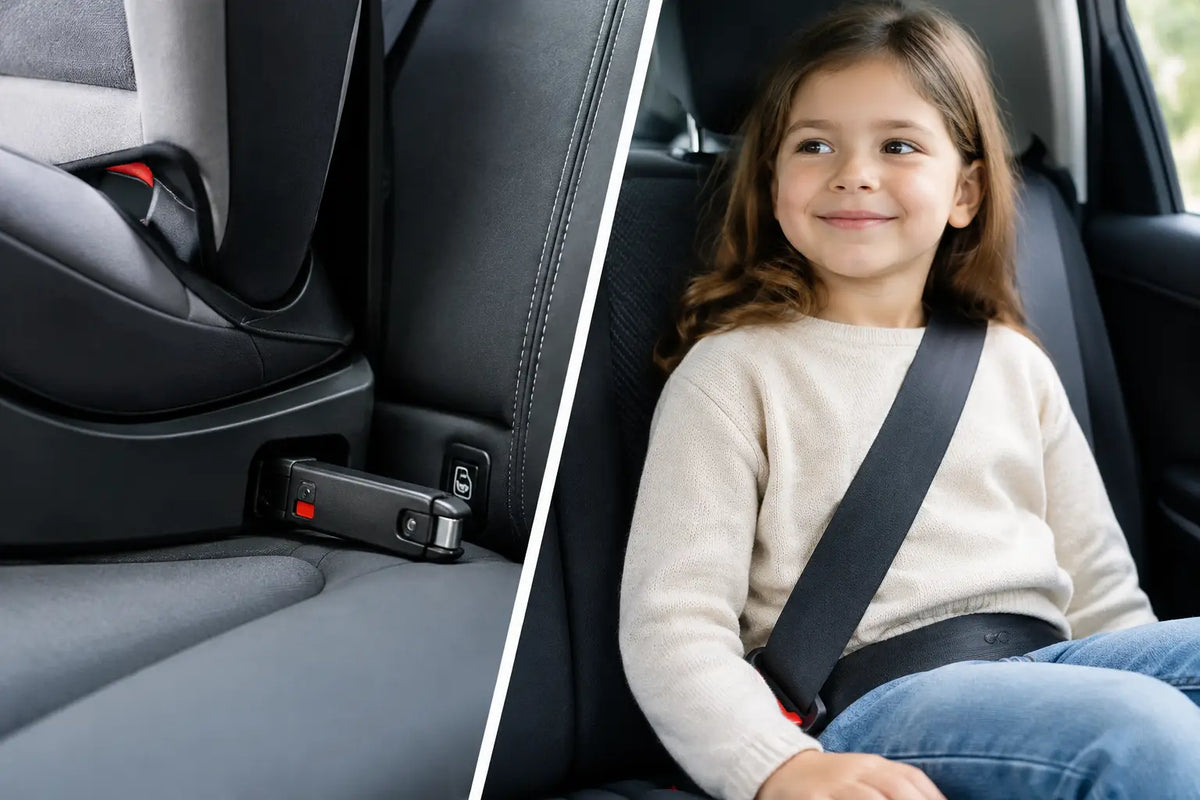
Isofix is a standardised child-seat fitting system built into many modern cars. Your vehicle has two metal anchor points hidden in the gap between the seat back and base. An Isofix child seat has connectors that click directly on to these points, usually with visual indicators that turn green when attached correctly.
Many Isofix seats also use a third point of contact to limit forward movement in a collision. This is either a top tether, which attaches behind the vehicle seat, or a support leg, which extends from the child seat base to the car floor. Always check your vehicle handbook before choosing a support-leg base, as some cars have underfloor storage compartments or floor designs that are not suitable.
A seat belt-fitted car seat is secured using the vehicle’s three-point adult seat belt. The belt follows clearly marked guides on the child seat and must be pulled tight, with no twists or slack. Some infant carrier bases are fitted by seat belt, while many group seats can be installed directly with the belt.
Both systems are safety tested. The real difference is how they are fitted, how easily mistakes can happen and whether they suit your car and daily routine.
Why many parents choose Isofix
The main benefit of Isofix is consistency. Once you have checked compatibility, the connectors make it easier to fit the seat in the same position each time. This can be particularly helpful when one parent handles most drop-offs, grandparents occasionally take over, or the seat needs to move between cars.
Most Isofix seats include indicators to show that the connectors, support leg or top tether are in the correct position. That visual reassurance is valuable when you are loading a baby while keeping an eye on bags, a pushchair and the rest of the family.
Isofix can also reduce side-to-side movement during normal driving because the seat is attached directly to the vehicle body rather than held by the belt. It is a convenient option for an infant carrier base, where parents may click the carrier in and out several times a day.
There are trade-offs. Isofix seats and bases are often heavier and can cost more than comparable belt-fitted options. They may also have a child weight limit that differs from a seat belt installation, so check the product instructions carefully. A bulky base is not always ideal for a family that regularly uses taxis, travels abroad or needs to move seats between several vehicles.
When a seat belt-fitted seat is the better choice
A seat belt-fitted child car seat is not a second-best option. When installed exactly as instructed, it is a safe, approved way to travel with your child. It can be especially practical if your car does not have Isofix points, if you use different vehicles, or if you need a lighter seat for occasional journeys.
This option may give you more choice for the centre rear seat too. In many vehicles, the centre seat does not have Isofix anchors, but it may have a suitable three-point seat belt. The centre position can be a good place for a child seat if the vehicle and child-seat manuals both allow it. Never assume it is suitable simply because there is a belt present.
Seat belt fitting requires a little more care. Follow the belt path marked on the seat, remove twists, lock or tension the belt as the manufacturer directs, and press the seat firmly into the vehicle cushion while tightening. Once fitted, the seat should not move more than around 2.5 cm side to side or forwards at the belt path.
For families in the UAE, a belt-fitted seat can also be useful for journeys in hire cars or visits with relatives. Before travelling, check whether the vehicle has three-point rear belts and whether the specific seat is approved for use there. A quick fit check before the day of travel avoids unnecessary stress at pick-up.
Compatibility matters more than the badge
Do not choose a car seat based only on whether it says Isofix, i-Size or seat belt fitted. Start with your child’s height, weight and developmental stage, then check the seat’s approval label and the manufacturer’s guidance. Current R129 or i-Size seats classify children primarily by height, helping parents select a better match as their child grows.
Next, check your vehicle. Isofix anchor points are often marked with a label or symbol, but the car handbook is the most reliable source. It will confirm which seating positions can be used, whether a top tether is available and whether a support leg is permitted. If you have a newer car, do not assume every rear seating position has the same features.
Also consider the shape of the vehicle seat. Deeply contoured cushions, fixed head restraints, long seat-belt buckles and very sloping vehicle seats can affect the fit. If you are fitting three child seats across the rear bench, seat width and access to buckles become just as important as the installation method.
Whenever possible, try the seat in your car before committing. At Baby Life, choosing travel gear with your vehicle and everyday routine in mind helps make each family journey simpler from the start.
Rear-facing for longer, whichever fitting method you choose
The direction your child faces is often more significant than the choice between Isofix and seat belt. Rear-facing seats support a young child’s head, neck and spine more effectively in a frontal collision. Keep your child rear-facing until they reach the maximum height or weight limit stated by the seat manufacturer, and ideally for as long as the seat allows.
Do not move to forward-facing simply because your child’s feet touch the vehicle seat or their legs look bent. Children are flexible, and bent legs alone are not a sign that they have outgrown rear-facing travel.
Check the harness every journey. It should sit flat, with no twists, and be snug enough that you cannot pinch excess webbing at the shoulder. The chest clip, where provided, should be positioned according to the manufacturer’s instructions. Avoid thick padded coats, as they can compress in a crash and leave the harness too loose. In warm weather, light layers are more comfortable and make it easier to achieve a close fit.
Common fitting mistakes to avoid
Even an excellent seat cannot protect a child as intended if it is used incorrectly. These errors are worth checking regularly, particularly after cleaning the car, changing vehicles or allowing someone else to fit the seat:
- Using Isofix connectors without correctly setting the support leg or attaching the top tether.
- Routing the seat belt through the wrong guides, or leaving the belt twisted or loose.
- Placing a rear-facing seat in front of an active passenger airbag.
- Moving a child into the next seat stage before they meet its minimum requirements.
- Letting the harness sit over bulky clothing, under the arms or too loosely around the shoulders.
A practical way to decide
Choose Isofix if your car has compatible anchors and you want a straightforward, repeatable installation with clear indicators. It is often a strong choice for daily use, particularly for infant carriers and families who value quick transfers.
Choose a seat belt-fitted seat if you need flexibility across cars, rely on taxis or hire vehicles, have no Isofix in the required seating position, or prefer a lighter and often more budget-friendly option. It is safe when correctly fitted and checked.
Whichever route you take, read both manuals before your first journey and practise fitting the seat when you are not in a rush. A properly matched, correctly installed seat gives you something every parent needs when the car door closes: a little more confidence for the road ahead.