Travel System Versus Pram: Which Fits Your Family?
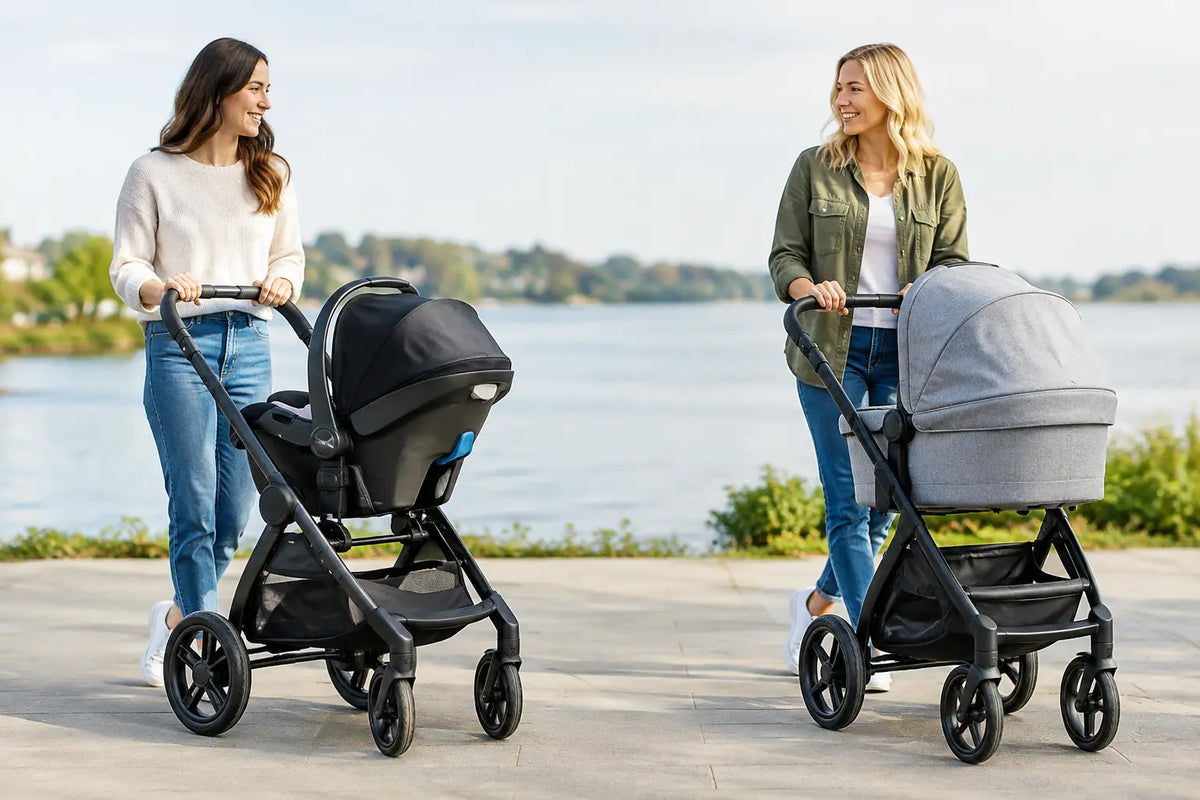
The pushchair decision often becomes real when you picture a sleeping newborn, a car journey, a supermarket stop and the walk back home - all in the same morning. In the travel system versus pram decision, there is no single best answer. The right choice depends on how your family travels, where you walk and what will make day-to-day life feel easier during those busy early months.
A pram can offer a beautifully calm, lie-flat space for newborn outings. A travel system can make getting from the car to your destination quicker, especially when your baby has fallen asleep. Understanding the difference helps you choose a set-up that supports your routine, rather than adding another thing to think about.
Travel system versus pram: the key difference
A pram is traditionally designed around a carrycot or fully lie-flat newborn seat. It gives very young babies a spacious, supportive place to rest while you are out walking. Many modern prams convert into a pushchair once your child is ready to sit more upright, which can extend their use well into the toddler years.
A travel system combines a pushchair chassis with a compatible infant car seat. Depending on the model, it may also include a carrycot. The car seat can be clicked on to the chassis using built-in fittings or approved adaptors, so you can move a baby from the car without waking them where possible.
This means the choice is not always strictly one or the other. Some families choose a complete travel system with a carrycot, car seat and reversible pushchair seat. Others prefer a dedicated pram for frequent walks and use their car seat only for journeys by car.
When a travel system makes sense
A travel system is often a practical choice for families who use the car regularly. If you drive to appointments, visit relatives, manage nursery drop-offs or enjoy outings that involve several stops, being able to transfer the car seat to the pushchair frame can save time and effort.
It is particularly useful in the first few months, when lifting a bulky carrycot in and out of the car may feel inconvenient. With the right car seat and base, your baby can be securely buckled in before you leave home, then moved onto the pushchair chassis at your destination.
Travel systems can also be good value when the components genuinely suit your needs. Buying compatible pieces together avoids uncertainty over fittings and gives you one coordinated set-up from newborn days onwards. Look for a chassis that folds easily, a car seat appropriate for your baby’s size and a pushchair seat with an adjustable recline, supportive harness and useful sun canopy.
There is one important consideration: infant car seats are designed for safe travel in a vehicle, not for long periods of routine sleep outside the car. For longer walks, café visits or days out, a lie-flat carrycot or fully reclined newborn-approved seat is usually the more comfortable option. Follow the car seat manufacturer’s guidance on use and breaks, especially with young babies.
A travel system may suit you if...
Your days involve regular car journeys, you value a quick transfer for short errands, or you want the convenience of choosing compatible travel pieces at the same time. It can be especially helpful for parents recovering after birth, when reducing awkward lifting matters.
When a pram is the better fit
A pram can be the stronger choice when walking is a major part of family life. If you plan daily neighbourhood walks, spend time outdoors or want your newborn to have a generous lie-flat space for naps, a carrycot-focused pram offers comfort and simplicity.
The flat sleeping surface is a key advantage for newborns. It supports a natural resting position and gives baby room to stretch, while a well-ventilated carrycot, protective hood and cover can help them stay comfortable in changing conditions. In the UAE, breathable fabrics, airflow panels and an effective UPF sun canopy are especially useful for daytime outings.
Many parents also enjoy the calmer pace a pram encourages. Rather than treating the pushchair as an extension of the car seat, it becomes your baby’s dedicated space for walks, fresh air and unhurried naps. If you live in a walkable area, have lifts and wide corridors, or can easily store a larger frame at home, that may be exactly what works best.
The trade-off is that some prams take up more boot space and can be less convenient for frequent transfers. Before choosing one, check its folded dimensions, weight and whether you can comfortably lift it into your car. A beautiful carrycot is far less useful if the chassis is difficult to manage alone.
Think beyond the newborn stage
Newborn suitability is essential, but your pushchair will ideally support your family for much longer. Consider what will happen when your baby becomes curious, wants to sit upright and eventually becomes a busy toddler with stronger opinions about walking.
A convertible pram or travel system with a reversible seat can be a practical long-term option. Parent-facing mode is reassuring for younger babies, while world-facing mode gives older babies a chance to observe their surroundings. Check the maximum child weight, seat height, leg support and recline positions rather than relying on age alone.
Storage is another everyday detail worth taking seriously. A generous basket makes room for changing essentials, snacks, muslins and a light blanket, without leaving you juggling bags. If you shop on foot or regularly carry items for more than one child, test whether the basket remains easy to reach when the seat is reclined.
What to check before you buy
The best pushchair is one you can use confidently, safely and often. Start with the practical features that affect every outing: how the brakes engage, whether the harness adjusts easily, how smoothly the wheels move and how much space the folded frame needs.
For your newborn, check that the carrycot or seat is suitable from birth and offers the recline level recommended by its manufacturer. For a travel system, confirm that the car seat is specifically compatible with that chassis. Do not assume a car seat from the same brand will automatically fit every pushchair frame.
Think about your usual surfaces too. Larger wheels and good suspension can feel more comfortable on pavements, kerbs and uneven paths. Compact wheels and a lighter frame may be better for shopping centres, tight lifts and smaller car boots. Neither is universally better - the right one is the model that matches where you will actually go.
It is also sensible to consider the season. A rain cover is useful for unexpected weather, while a ventilated carrycot, breathable liner and shade-friendly canopy matter in warmer conditions. Never cover a pram completely with a blanket or muslin in hot weather, as this can reduce airflow and raise the temperature around your baby.
A simple way to make the decision
Picture your most common week, not your idealised one. Are you mainly walking from home, or driving to several places a day? Will the pushchair live in a hallway, a flat with limited storage or the boot of a car? Do you want one coordinated system, or would you rather prioritise a roomy lie-flat pram and choose a car seat separately?
For many families, a travel system is the convenient all-rounder. For others, particularly those who walk frequently with a newborn, a pram provides the comfort and outdoor-ready space they value most. A complete system that includes both a carrycot and car seat can offer flexibility, but only if you will use each piece.
At Baby Life, choosing from trusted baby travel essentials means you can focus on the details that make your routine feel more manageable: safe support for your baby, simple handling for you and comfort for every family outing. Choose the option that fits the journeys you already make, then let it make room for the lovely unexpected ones.