How to Prepare Formula Feeds Safely at Home
A hungry baby can make every minute feel urgent, especially during those early weeks and night feeds. Yet taking a consistent few minutes to prepare formula feeds safely protects your baby from avoidable tummy upsets and gives you confidence in your routine. The key is not complicated equipment or perfection. It is clean hands, carefully sterilised feeding equipment, the right water temperature and clear rules about timing.
Why powdered formula needs extra care
Powdered infant formula is not sterile. Although it is made to strict standards, it can occasionally contain bacteria that may make a young baby unwell. This is why safe preparation matters most for newborns, premature babies and babies with a weakened immune system.
Ready-to-feed formula is sterile until opened, so it can be a practical option for travel, hospital bags or feeds when washing facilities are limited. Powdered formula is still a convenient everyday choice for many families, but it must be made up correctly each time.
Always follow the preparation instructions on your formula tin as well as advice from your healthcare professional. Brands can have specific guidance on scoop sizes, water volumes and storage.
Prepare formula feeds safely with a simple routine
A familiar routine makes safe feeding easier when you are tired. Before you begin, clear and wipe down the preparation area. Keep pets, dirty dishes and used nappies away from the surface.
Start with clean hands and sterilised equipment
Wash your hands thoroughly with soap and warm water, then dry them using a clean towel or paper towel. Wash bottles, teats, collars and caps after every feed, using a bottle brush reserved only for feeding equipment. Pay close attention to the inside of teats and bottle threads, where milk residue can remain.
Sterilise all feeding equipment before use, particularly for babies under 12 months. Cold-water sterilising systems, steam sterilisers and microwave sterilisers can all work well when used according to their instructions. If you are using equipment from a steriliser, avoid touching the inside of the bottle or teat.
Having enough bottles for a day can make the routine less pressured. A practical feeding set-up often includes a steriliser, bottle brush, drying rack, formula container and spare teats in the right flow rate for your baby.
Use freshly boiled water at a safe temperature
Use fresh drinking water from the tap each time rather than water that has been sitting in the kettle. Boil the water, then allow it to cool for no longer than 30 minutes. It should still be at least 70°C when it is mixed with powdered formula.
This temperature helps reduce the risk from bacteria in the powder. Water that is too cool may not do this effectively, while boiling water poured straight onto the powder can affect some nutrients. A temperature-controlled kettle may be convenient, but check that it reaches at least 70°C rather than relying on a lower preset temperature.
If you are unsure about the drinking water available where you are staying, particularly when travelling, seek local guidance. In the UAE, families may also prefer to plan ahead with ready-to-feed formula for days out or journeys where freshly boiled water is not practical.
Measure water first, then add the powder
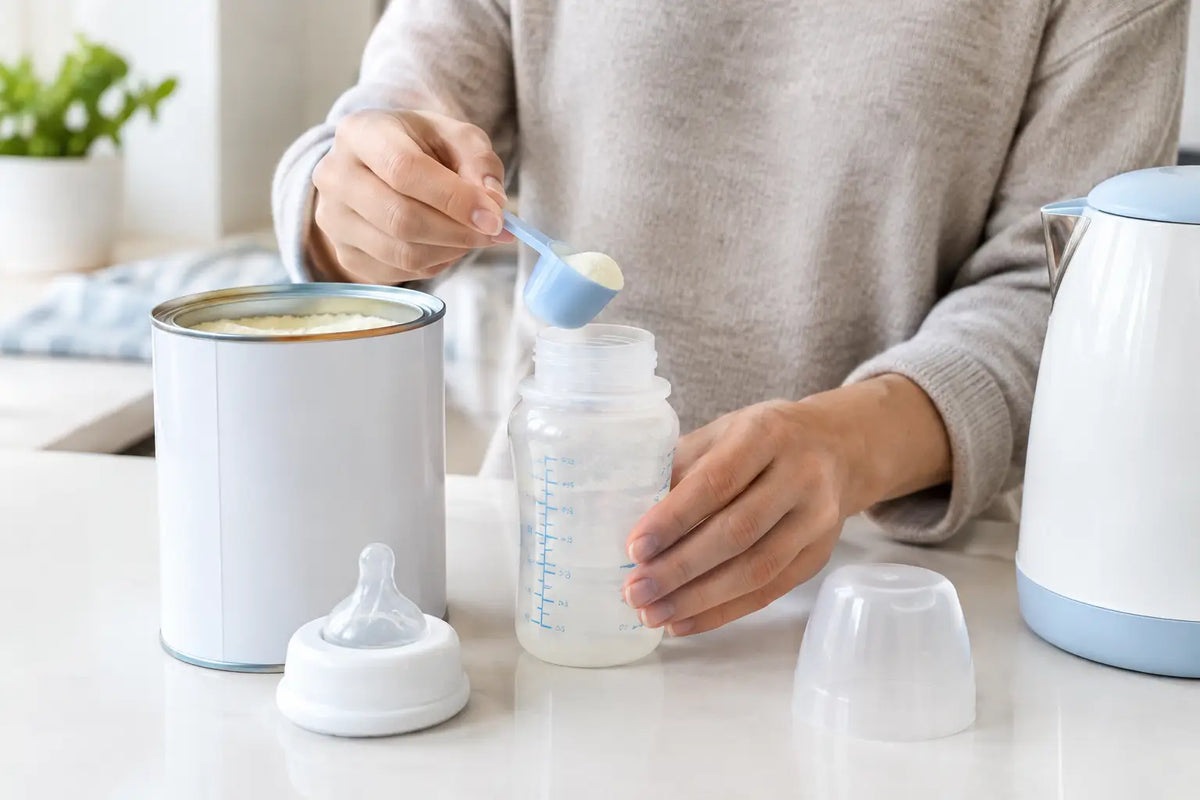
Pour the required amount of cooled boiled water into the sterilised bottle first. Add the exact number of level scoops stated on the formula packaging. Use only the scoop supplied with that tin, as scoops can differ between brands and formula types.
Do not pack powder into the scoop, use heaped scoops or add an extra scoop to make a feed seem more filling. Too much powder can place strain on a baby's kidneys and contribute to dehydration. Too little can mean your baby is not getting the nutrition they need. Formula should never be diluted to make a tin last longer.
Place the teat and cap on the bottle, then gently shake until the powder has dissolved. Check that there are no dry clumps around the base or collar of the bottle.
Cool the feed quickly and test it
Cool the bottle by holding it under cold running water or placing it in a bowl of cold water. Keep the teat and cap on so water cannot enter the feed. Swirl the bottle occasionally to cool it evenly.
Test the temperature by placing a few drops on the inside of your wrist. It should feel lukewarm, not hot. Do not test it on your lips, and do not use a microwave to warm or reheat formula. Microwaves can create dangerous hot spots even when the bottle feels only warm on the outside.
A bottle warmer can be useful for gently warming a feed that has been safely prepared and chilled, but it does not replace safe preparation. Check the temperature carefully before feeding.
Timing and storage rules that protect your baby
The safest approach is to make one feed at a time, just before your baby needs it. Once prepared, a formula feed should ideally be used straight away.
If your baby has started drinking from the bottle, discard any leftover milk within one hour. Bacteria from your baby's mouth can enter the milk during feeding and multiply quickly. It can feel wasteful, but saving unfinished formula for later is not safe.
A freshly prepared feed that has not been touched can be kept at room temperature for up to two hours. If you need to prepare feeds in advance, follow the formula manufacturer's instructions and local health guidance closely. In general, prepared bottles should be cooled quickly, stored at the back of a fridge at 5°C or below and used within 24 hours. Take out only one bottle at a time, and discard it if it has been left out for more than two hours.
For night feeds, many parents find it easier to sterilise bottles before bed and keep measured formula powder in a clean, dry formula dispenser. Freshly boiled water can then be measured and cooled safely when needed. This takes a little planning, but it avoids keeping a made-up bottle at room temperature overnight.
Feeding safely when you are out
A changing bag can hold more than nappies and spare clothes. For formula-fed babies, pack a sterilised empty bottle, a measured portion of formula powder in a clean container, and a flask of freshly boiled water. Use the water while it is still hot enough to prepare the feed safely, then cool the bottle before offering it.
For longer outings, flights or hot days, ready-to-feed formula can simplify the process. Carry unopened cartons or bottles as directed on the pack, and bring a sterile teat if the product is designed for one. Once opened, use it promptly and discard any remaining milk according to the label instructions.
Avoid leaving prepared feeds in a warm car, under a pram or in a changing bag for later. Heat gives bacteria the conditions they need to multiply quickly.
Common shortcuts to avoid
Parents are often offered well-meaning advice that does not match current feeding guidance. Avoid using mineral water, flavoured water or milk in place of safe drinking water unless a healthcare professional has specifically advised it. Do not add cereal, honey, sugar, medicine or anything else to a bottle unless your baby's clinician has told you to do so.
It is also best not to swap formula brands or formula stages without checking suitability. If your baby seems uncomfortable after feeds, is being sick frequently, has a rash, diarrhoea, fewer wet nappies or is not gaining weight as expected, speak to a paediatrician or health visitor rather than changing the mixing ratio.
A calmer feed starts before your baby is hungry
Keeping your feeding essentials clean, organised and easy to reach can turn a rushed moment into a reassuring routine. Set up a small preparation area with sterilised bottles, the correct formula, clean water and the equipment you use most. When your baby wakes hungry, you will have what you need to prepare their feed carefully, hold them close and focus on the moment that matters.