Baby Gates: A Safer Home for Curious Toddlers
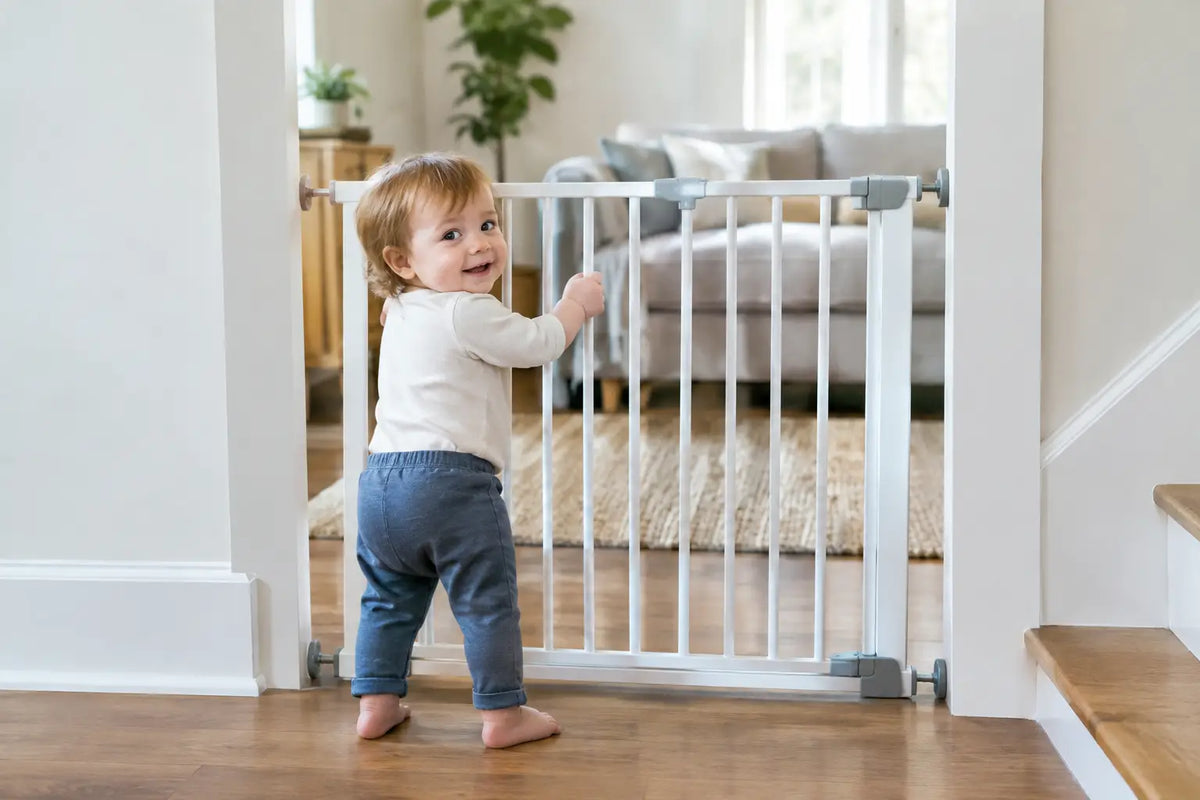
The moment your baby starts crawling, familiar rooms suddenly reveal a different side: staircases, kitchen cupboards, pet bowls and an open front door can all become tempting destinations. Baby gates help create clear, safer boundaries while your little explorer builds confidence and independence. The right gate does not replace close supervision, but it can make everyday routines feel far more manageable.
For many families, the best approach is not to gate off every room. Instead, focus on the areas where a few seconds of curiosity could lead to a serious fall, access to heat, water or cleaning products, or an unsupervised trip outdoors.
Where baby gates make the biggest difference
Stairs are the first priority. A properly fitted gate at the top of the stairs prevents a crawling baby or unsteady toddler from reaching the edge when an adult is briefly distracted. A second gate at the bottom can stop children from attempting to climb before they are ready, particularly when older siblings are moving around the house.
The kitchen is another common place for a gate. It gives you a safer zone for preparing meals, handling hot pans or unloading the dishwasher without needing to carry your child every time you move. A gate can also be useful between an open-plan living area and a kitchen, as long as it fits the opening securely.
Consider other changing needs around the home. You may want to limit access to a utility area, a home office with cables, a bathroom, a balcony door or a room where pets need quiet space. In UAE homes, a gate near an external door can be particularly reassuring when people are coming and going, although doors should always remain locked and supervised rather than relying on a gate alone.
Choosing between pressure-fit and screw-fit baby gates
The most suitable gate depends largely on where it will be used. Pressure-fit gates are held in place by pressure against the walls or door frame. They are popular for doorways and rooms on the same level because they usually need no drilling and can be moved when your family’s routine changes. This makes them a practical choice for rented homes or for creating a temporary boundary between play and living spaces.
However, pressure-fit gates should not be used at the top of stairs. Their frame often has a low bar across the bottom that can become a trip hazard, and a gate held only by pressure is not the safest choice where a fall could happen. Choose a screw-fit, hardware-mounted gate for the top of the stairs. It attaches directly to a solid wall, banister or suitable fitting point for dependable stability.
Retractable gates can be a useful option for wider openings or spaces where you would prefer a less visible barrier when it is not in use. They need correct installation and tensioning, so check that the model is designed for your chosen location. Extra-wide gates and extension panels can help with larger doorways, but only use extensions approved for that specific gate.
Before choosing, measure the opening at the narrowest point and measure again close to the floor if the walls are not perfectly even. Check the gate’s stated fitting range rather than guessing from the width of the doorway. A gate that appears too narrow when first unpacked may simply need its adjustment bolts tightened, while a gate pushed beyond its recommended width may not be secure.
Think about everyday access too
A safe gate also needs to work for the adults using it several times a day. Look for one-handed opening, a secure child-resistant release and a walk-through design if it will be used often. For a busy hallway or kitchen entrance, a gate that opens in both directions can be convenient. At the top of stairs, though, it is preferable for the gate to open away from the stairs.
If grandparents, a nanny or older children regularly help at home, show everyone how the gate locks and how to check it before walking away. Convenience matters, but a gate should never be left open because the latch feels fiddly or the route through the house is awkward.
What to check before buying a safety gate
Look for a gate designed and tested for child safety, ideally marked to the relevant safety standard, such as EN 1930:2011. Read the manufacturer’s age, weight and installation guidance carefully. Gates are generally intended for young children, but a determined, climbing toddler may outgrow their safe use sooner than expected.
The materials should suit your household. Metal gates are durable and easy to wipe clean, making them a practical choice near kitchens and entrances. Wooden designs may better suit a nursery or living space, while mesh or retractable styles can feel lighter in an open-plan room. Whichever style you choose, check for smooth finishes, secure fittings and gaps that cannot trap a child’s head or body.
Avoid using gates with loose parts, damaged mesh, bent frames or unreliable catches. Second-hand gates can be useful only if all original components and instructions are present, the model has not been recalled, and it can be fitted exactly as intended. A missing wall cup, extension or mounting bracket is not a small detail when safety is involved.
Fitting your gate safely
Installation is where a good gate becomes a dependable one. Follow the manufacturer’s instructions for the exact model, including guidance on wall cups, banister adaptors and the direction in which the gate should open. Do not attach a screw-fit gate to weak plasterboard without suitable reinforcement, and do not improvise with string, tape or furniture to make a gate fit.
Once fitted, test it before allowing your child near it. Hold the frame and apply firm pressure in different directions. The gate should not slide, wobble excessively or open when pushed. Make sure the latch closes fully every time, and check that the gap underneath and around the sides remains within the manufacturer’s limits.
For pressure-fit models, inspect the indicator markings if included and recheck the tension regularly. Changes in temperature, flooring, repeated use and a child leaning on the frame can affect how firmly it sits. This is especially worthwhile in homes with smooth tiled floors, where a gate may look stable but need careful adjustment.
Avoid common gate mistakes
Never climb over a fitted gate while holding your baby. It is easy to catch a foot on the bottom bar or misjudge a step, particularly when tired. Use the gate as designed, even during quick trips between rooms.
Keep climbable furniture away from the gate. A chair, toy box or low table can turn a barrier into a climbing challenge for an adventurous toddler. Also check nearby curtain cords, shelves and side tables, as children may reach for them while standing at the gate.
Finally, do not assume that a closed gate means a space is fully childproof. Kitchens still need cupboard locks where necessary, bathrooms need supervision around water, and stair areas should be kept clear of toys and loose items.
Adapting your home as your child grows
Your child’s needs will change quickly. A gate that first protects a crawling baby may later help establish a calm play area while you prepare dinner. Then, as your toddler becomes taller, faster and more skilled at climbing, it may be time to reassess whether the gate remains appropriate.
Watch how your child interacts with it. If they are trying to climb, shaking the frame, reaching the release mechanism or using nearby furniture to gain height, do not wait for a near miss. Adjust the room layout, increase supervision and follow the manufacturer’s advice on when to stop using the gate.
Creating a safer home is rarely about one product or one perfect setup. It is about noticing how your family lives each day and putting practical support in the places where it matters most. A well-chosen, correctly fitted gate gives your child room to explore safely and gives you a little more confidence to enjoy those busy early years.