Best Baby Bath Tubs for Safe, Easier Bath Time
A newborn can feel surprisingly small and slippery at bath time, especially when you are trying to support their head, reach for the washcloth and keep the water comfortably warm. The best baby bath tubs make that everyday routine feel calmer: they give little ones secure support while helping parents bathe them with both hands closer to where they need to be.
A baby bath does not need to be complicated or packed with extras. The right choice depends on your baby’s age, the space you have and how you prefer to manage bath time. A supportive newborn tub may be ideal in the first months, while a larger, upright option can be more practical once your baby is sitting confidently.
What makes the best baby bath tubs?
Safety and a comfortable fit should come before colour, shape or clever-looking features. Look for a stable base that sits flat on the floor or inside a full-sized bath, smooth surfaces that are easy to wipe clean, and an age-appropriate support position. A plug can make emptying easier, but only if it is secure and does not create an uncomfortable spot under your baby.
The best design is one that lets you stay close and attentive. A bath tub should support your baby, not replace your hands. Keep one hand on a newborn or young baby at all times, even when they are resting in a moulded recline or using a bath support.
It is also worth thinking about the ordinary parts of family life. If you have a compact bathroom, a foldable tub or one with a hanging hook can make storage much simpler. If you expect to use it daily for several months, a durable, roomy design may be the better value than a smaller newborn-only option.
Choose a baby bath tub for your baby’s stage
Newborn bath tubs: gentle support from day one
For the first weeks, a reclining baby bath tub with a shaped backrest can help keep your newborn in a comfortable semi-reclined position. Look for a smooth, gently contoured surface with enough room for their legs to move, rather than a deep or overly restrictive seat. The key benefit is support for a baby who cannot yet hold up their head.
Some newborn tubs include a soft mesh sling or hammock. These can be useful because they lift your baby slightly above the water and help them stay supported. Check that the sling attaches firmly, is suitable for your baby’s weight and can be removed for cleaning. Fabric sections need to dry fully between baths to avoid lingering dampness.
A newborn insert that converts into a larger tub can be a practical option for parents who want one bath solution for longer. The trade-off is that these designs can take up more cupboard space than a simple newborn bath.
Infant bath tubs: room to splash and sit
Once your baby has stronger head and neck control, they usually need more space and a more upright position. A larger infant tub offers a stable area for kicking, splashing and playing, while raised supports or a non-slip base can help prevent sliding.
Do not move to an upright seat simply because your baby seems curious. Wait until they can sit with reliable control, then follow the manufacturer’s age, weight and development guidance. Even a baby who sits well on the floor can topple suddenly in water.
A roomy tub is especially helpful if bath time has become part of your evening wind-down. There is space for a few simple bath toys, but avoid clutter. A clear bathing area makes it easier to keep your attention on your little one.
Foldable and space-saving tubs: made for smaller homes
A foldable baby bath tub is a strong choice for flats, shared bathrooms and families who want to keep their space organised. Many fold nearly flat for storage behind a door, beside a washing machine or in a cupboard. Some include non-slip feet and a water-level indicator, which can be useful features when used alongside your own temperature check.
Before choosing a folding design, check how it locks open. It should feel firm and stable on a level floor, with no wobble at the hinges. Also consider whether you can comfortably empty and dry it. A tub that stores neatly is only helpful if its folds and joints are easy to rinse after every use.
Bath supports and seats: useful, but not a substitute for supervision
A bath support is designed to cradle a young baby in a full-sized bath, while a bath seat is generally intended for older babies who can sit independently. These products can save water and reduce the need for a separate tub, but they are not safety devices.
Suction cups can lose their grip, and babies can lean, twist or slip in seconds. Use supports and seats only on the surface and in the way specified by the manufacturer. Stay within arm’s reach throughout the bath, and never leave a baby in a seat while you answer the door, collect a towel or check your mobile phone.
Get the size and set-up right
The safest place for a baby bath tub is usually a flat, stable surface such as the bathroom floor or inside an empty adult bath. Avoid placing it on a table, kitchen worktop, chair or raised stand unless the tub and stand are specifically designed and securely fitted together. A raised bath may feel easier on your back, but the risk of a fall is much greater if the setup is unstable.
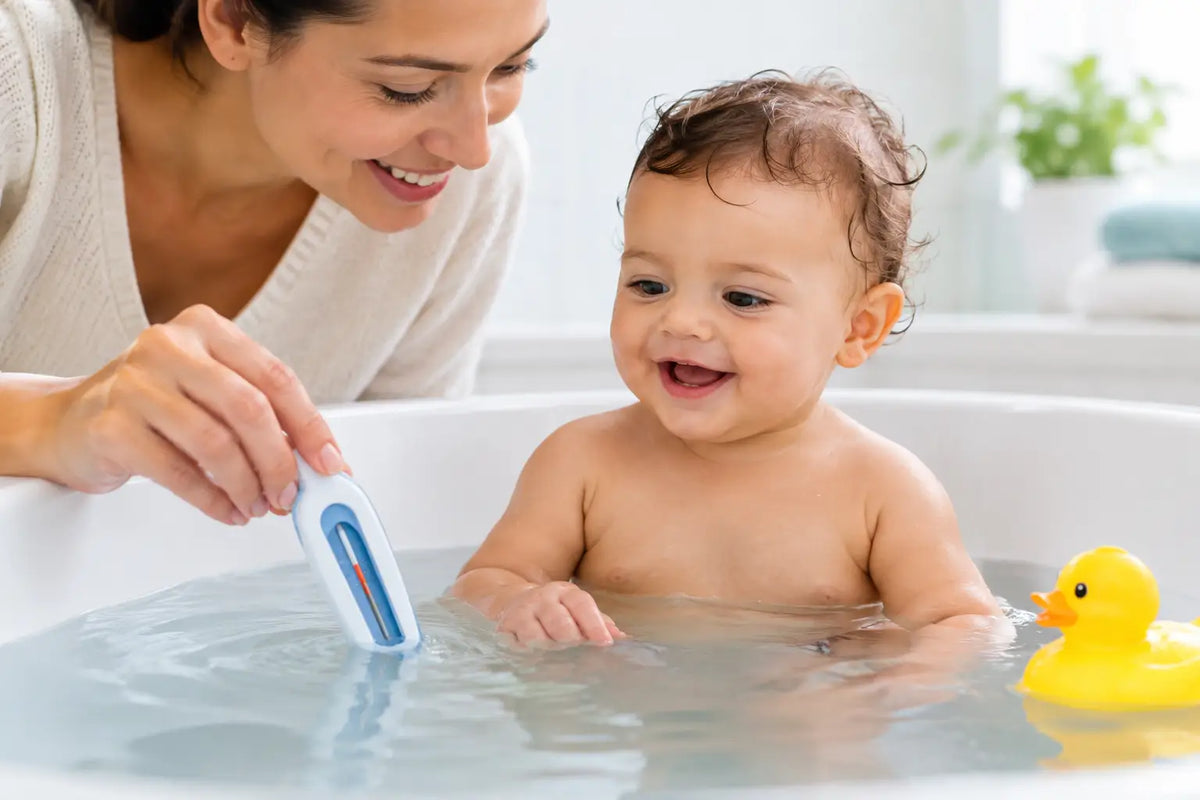
Fill the tub before placing your baby in it. For young babies, only a small amount of water is needed. The water should feel comfortably warm, not hot, when checked with your wrist or elbow. A bath thermometer can offer extra reassurance, particularly when more than one caregiver is involved, but it should never replace a hands-on check.
Gather everything before you start: a clean nappy, sleepwear, towel, washcloth and any gentle baby wash you plan to use. This small bit of preparation means you will not need to step away midway through the bath. In warm UAE homes, it can also help to keep the room comfortably cooled without making it draughty for a wet baby.
Materials, cleaning and everyday convenience
Most baby bath tubs are made from durable plastic, which is light, easy to carry and quick to clean. Choose one with smooth edges, no cracks and no hard-to-reach gaps where soap residue can build up. A non-slip base is useful, but it still needs to sit on a dry, level surface.
After each bath, empty the water straight away, rinse away soap and allow the tub to air-dry completely. Wipe it with a clean cloth as needed, paying attention to plugs, folds, suction cups and removable inserts. If your tub has a mesh sling, wash it according to its care instructions and make sure it is thoroughly dry before the next use.
You do not need a large collection of products to create a comfortable routine. A dependable bath tub, soft towel, mild cleanser and clean nappy cover the essentials. Choosing practical bathing items from trusted baby brands helps make those first routines easier to repeat, even on tired evenings.
When is it time to move on from a baby bath tub?
Your baby may outgrow their tub when they are too long for the recline, can pull themselves up against the sides, exceed the stated weight limit or seem cramped while sitting. This often happens gradually, so check the fit regularly rather than waiting for bath time to become awkward.
When you transition to the family bath, use a non-slip mat and only a shallow level of water. Keep the same close supervision and calm preparation that worked in the baby tub. The setting may change, but the safety basics do not.
The right baby bath tub should make a small daily task feel more comfortable for both of you. Choose the one that fits your baby now, works safely in your home and leaves you free to enjoy those warm, splashing moments together.