Small Space Nursery Ideas That Work Harder

A nursery does not need a dedicated room, a large wardrobe or matching furniture to feel ready for your baby. The best small space nursery ideas focus on what you will use every day: a safe sleep space, an easy changing routine, comfortable feeding moments and simple storage that keeps essentials within reach. With a few thoughtful choices, even a corner of your bedroom, a compact spare room or a small flat can become a calm, practical place for your little one.
Start with the essentials, not the extras
When space is limited, every item should earn its place. Start by planning the four core nursery needs: sleeping, changing, feeding and storing daily essentials. This helps prevent a compact room from filling up with products that look lovely but are not useful in the first few months.
A cot or bedside crib, a firm compatible mattress, fitted sheets, a changing mat, nappies, wipes and a small selection of baby clothes cover the basics. Add a comfortable chair only if the room can accommodate it without restricting movement. If it cannot, a supportive nursing pillow can make feeds on your bed or sofa more comfortable instead.
It is tempting to prepare for every stage at once, but babies grow quickly and your needs will change. Leaving some clear floor space is often more valuable than buying extra furniture before your baby arrives.
Small space nursery ideas for a safer layout
In a compact nursery, layout matters more than decoration. Begin with the sleep area and work outwards. Place the cot or crib away from windows, radiators, direct sunlight, curtain cords and shelves. Keep the surrounding area clear so there is no chance of items falling into the sleep space.
For UAE homes, it is also worth considering the position of air conditioning and strong daylight. Your baby should be comfortable, but a cot should not sit directly in the path of cold air. Blackout blinds can help with bright mornings and daytime naps, provided cords are secured well out of reach.
Put the items you reach for most often close to the changing and feeding area. A nappy caddy beside the changing mat means you do not need a large changing unit, while a small lidded bin nearby makes nappy changes easier. Keeping one hand on your baby during changes is essential, so arrange supplies before you begin rather than stepping away to find them.
Make one wall do more
A single clear wall can provide far more storage than several small pieces of furniture. Choose slim wall-mounted shelves for books, a soft night light and a few everyday items, but mount them safely out of your baby's reach and never directly above the cot or changing area.
Wall hooks can hold a changing bag, a baby carrier or a lightweight organiser. A vertical book ledge keeps board books visible without using valuable floor space. If you rent your home, look for removable options that suit the wall surface, but always check their weight limits before relying on them for anything substantial.
Choose furniture that adapts with your family
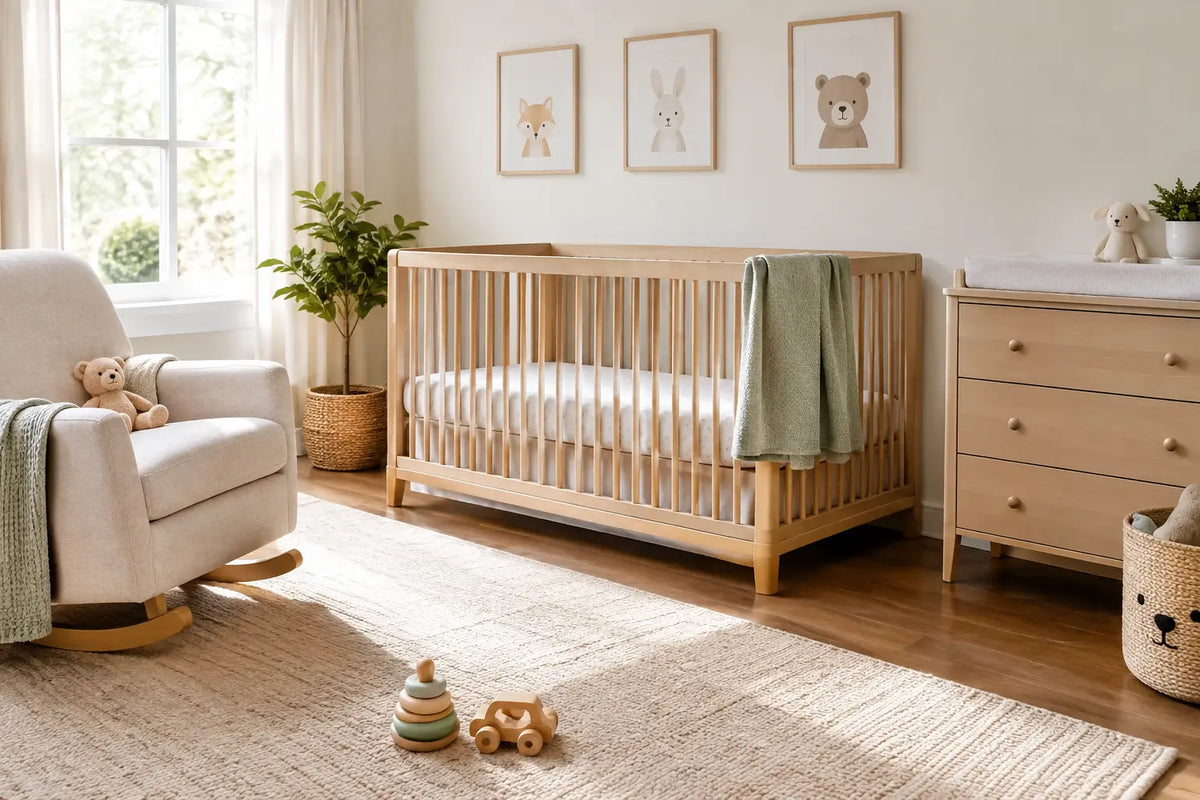
The most useful small nursery furniture has more than one purpose or can stay useful as your child grows. A compact cot with adjustable mattress height can serve from newborn days into toddlerhood, depending on the model. A dresser with a securely fitted changing topper can work as storage long after nappies are no longer part of your routine.
If you are creating a nursery corner in your own bedroom, a bedside crib may be the right choice for the early months. It keeps your baby close for night feeds while taking up less room than a full-size cot. Check that it is compatible with your bed and follow the manufacturer’s instructions for installation and safe use.
Under-cot drawers can be useful for spare bedding, sleep bags and out-of-season clothing. They are a better option than loose boxes that gather dust and become difficult to move. Look for smooth-running, enclosed storage so fabrics stay protected.
Avoid buying furniture simply because it is labelled nursery furniture. A narrow chest of drawers, a compact wardrobe or a sturdy storage bench may suit your home better. The key is to measure carefully, including door swings, drawer clearance and the space needed to lift your baby safely in and out of the cot.
Use closed storage to create visual calm
Open shelves can make a small room feel busy very quickly. A mix of drawers, baskets with lids and fabric storage cubes helps conceal the everyday reality of muslins, nappies, tiny socks and spare vests. It also makes cleaning faster when visitors are due or you simply need the room to feel calmer.
Organise storage according to routine, rather than product type. Keep nappy-change supplies together, feeding cloths together and bedtime items together. This saves time when you are tired and prevents you from opening several drawers during a single task.
A simple clothing system helps too. Keep the current size in the main drawer, place the next size up in a labelled box, and move outgrown pieces into a separate bag or storage container. Baby clothes are small, but they multiply quickly. Sorting regularly prevents drawers from becoming unusable.
Create a portable changing station
A portable changing station is one of the most practical solutions for homes without room for a changing table. Use a handled caddy or divided basket for nappies, wipes, nappy cream, muslins and a spare babygrow. Keep it beside a wipe-clean changing mat that can be used on a stable, clear surface.
This setup can move between your bedroom, living room and nursery corner, which is especially helpful during the newborn stage. Just remember that portability does not replace safety: choose a firm surface, keep your supplies within reach and never leave your baby unattended.
Keep the nursery light, soft and easy to maintain
A compact room benefits from a restrained colour palette. Pale neutrals, soft greens, warm creams or gentle pastels can make the room feel open without making it cold. You do not need to avoid darker colours completely, but using them on one small feature area rather than every wall can keep the space from feeling enclosed.
Choose washable, hardworking textiles. A few fitted sheets, absorbent muslins, a machine-washable rug and a practical chair cover are more useful than layers of decorative fabric. Keep cot bedding simple and follow safe sleep guidance: your baby's sleep space should remain clear, with the appropriate firm mattress and fitted sheet.
Lighting should support real family routines. A dimmable lamp or gentle night light makes overnight feeds and nappy changes less disruptive than switching on a bright ceiling light. During the day, natural light is lovely, but use blinds or curtains to manage heat and glare.
Make room for the parent as well as the baby
A nursery works best when it makes caring for your baby easier. Reserve a small place for water, snacks, a phone charger and anything you may need during feeds. If there is no room for a nursing chair, a small side table beside your usual feeding spot can still make a big difference.
Think about the path through the room at night. Can you reach the cot without stepping over baskets? Is the changing mat ready to use? Are clean sleep suits and spare sheets easy to find? These small details are what turn a neatly styled corner into a space that supports you at 3 am.
Buy gradually and leave space to grow
Small rooms reward patience. Begin with safe sleep, practical changing supplies and the storage you genuinely need, then live with the layout for a few weeks. You may find that a slim laundry basket is more useful than another shelf, or that a baby carrier creates more flexibility than a large chair.
At Baby Life, parents can choose nursery, feeding, changing and everyday baby essentials in one convenient place, making it easier to build your setup around what your family will actually use. Choose trusted, comfortable pieces that fit your home now, and let the nursery grow alongside your baby rather than trying to complete every detail before they arrive.