Which Nappy Size Fits Newborn Babies Best?

Those first nappy changes can feel surprisingly high-stakes. You want your baby dry, comfortable and settled, but a pack labelled “newborn” does not always guarantee the best fit. If you are wondering which nappy size fits newborn babies, start with your baby’s current weight and body shape rather than their age alone.
Most full-term newborns begin in a newborn or size 1 nappy. However, babies arrive in many different sizes, and sizing ranges vary between brands. A nappy that fits well should sit softly against the skin, contain wee and poo without gaps, and leave no deep marks after a change.
Which nappy size fits newborn babies?
For many brands, newborn nappies are designed for babies weighing roughly 2-5 kg, while size 1 nappies often cover around 2-5 kg or 2-6 kg. The overlap is useful: it lets you choose according to your baby’s build and the way the nappy sits, rather than feeling tied to one number on the pack.
A baby born under about 3 kg may be more comfortable in a newborn size, especially in the first days when a close fit around the legs matters most. A baby who is 3.5 kg or more at birth may fit size 1 straight away. Larger babies may outgrow a newborn size very quickly, so it is sensible not to stock up on too many small packs before birth.
Always check the weight guide printed on the specific pack you are buying. Brands cut their nappies differently: some are roomier through the waist, some have more stretch across the back, and some suit slimmer legs better. The right size is the one that works for your baby, not simply the one that sounds right by age.
What a well-fitting newborn nappy looks like
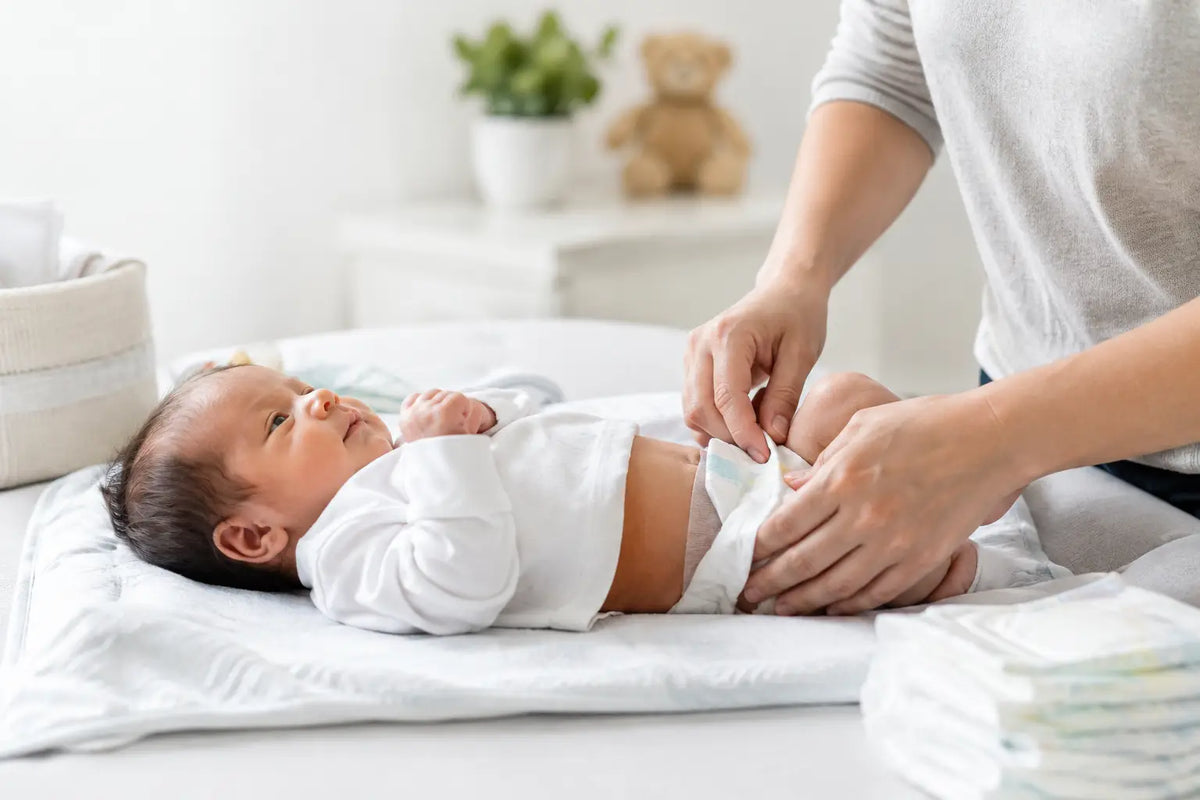
A newborn nappy should come up to just below the belly button, unless it has a shaped or fold-down front designed to protect the umbilical cord stump. The fastening tabs should meet comfortably at the front without needing to be pulled to their limit. You should be able to run one or two fingers gently under the waistband.
Around the legs, the elastic cuffs should sit in the crease where the leg meets the body. Run a finger around each cuff after fastening to make sure it is turned out rather than tucked inside. This small step can make a real difference to preventing leaks.
The nappy should look neat but not tight. A little fullness between the legs is normal, particularly after a feed or when the nappy has absorbed liquid. What you do not want are pronounced red grooves, a waistband that digs in, or tabs that barely reach the centre of the front panel.
Newborn nappies and the umbilical cord
Until the cord stump falls away and the area has healed, avoid rubbing or covering it with the top of a standard nappy. Many newborn nappies have a dip at the front for this reason. If yours does not, fold the front edge down gently before fastening.
Keep the area clean and dry, and follow advice from your midwife, health visitor or paediatrician if you notice persistent redness, swelling, discharge or an unusual smell. The nappy should support comfort, not put pressure on healing skin.
Signs the nappy is too small
A nappy can technically fit within the weight range and still be too small for your baby. Babies grow in spurts, and the first few weeks can bring rapid changes. Consider moving up a size if you repeatedly notice four or more of these signs:
- Deep red marks at the waist or thighs that do not fade quickly.
- Leaks around the legs or back, despite fitting the nappy carefully.
- Fastening tabs that are difficult to close or sit at their maximum stretch.
- The nappy sits low on the tummy or struggles to cover your baby’s bottom.
- Frequent blowouts that are not linked to a loose leg cuff or a missed change.
Signs the nappy is too big
A nappy that is too large may look comfortable at first, but it is unlikely to contain mess reliably. Watch for gaps around the thighs, a loose or sagging waistband, or a nappy that shifts down when your baby wriggles. You may also notice leaks soon after a change, even when the nappy is not particularly full.
For a very small newborn, a smaller size can provide a better seal without feeling restrictive. Premature and low-birth-weight babies may need specialist premature or extra-small nappies. In that case, ask the neonatal team or your healthcare professional for guidance, particularly if your baby has delicate skin or medical equipment to accommodate.
How many newborn nappies should you buy?
Newborns often need eight to 12 nappy changes in 24 hours. That means a large bulk purchase can seem practical, but it may not be the best value if your baby moves through the newborn size in a week or two. Begin with one or two packs in newborn size and one pack of size 1 if there is an overlapping weight range.
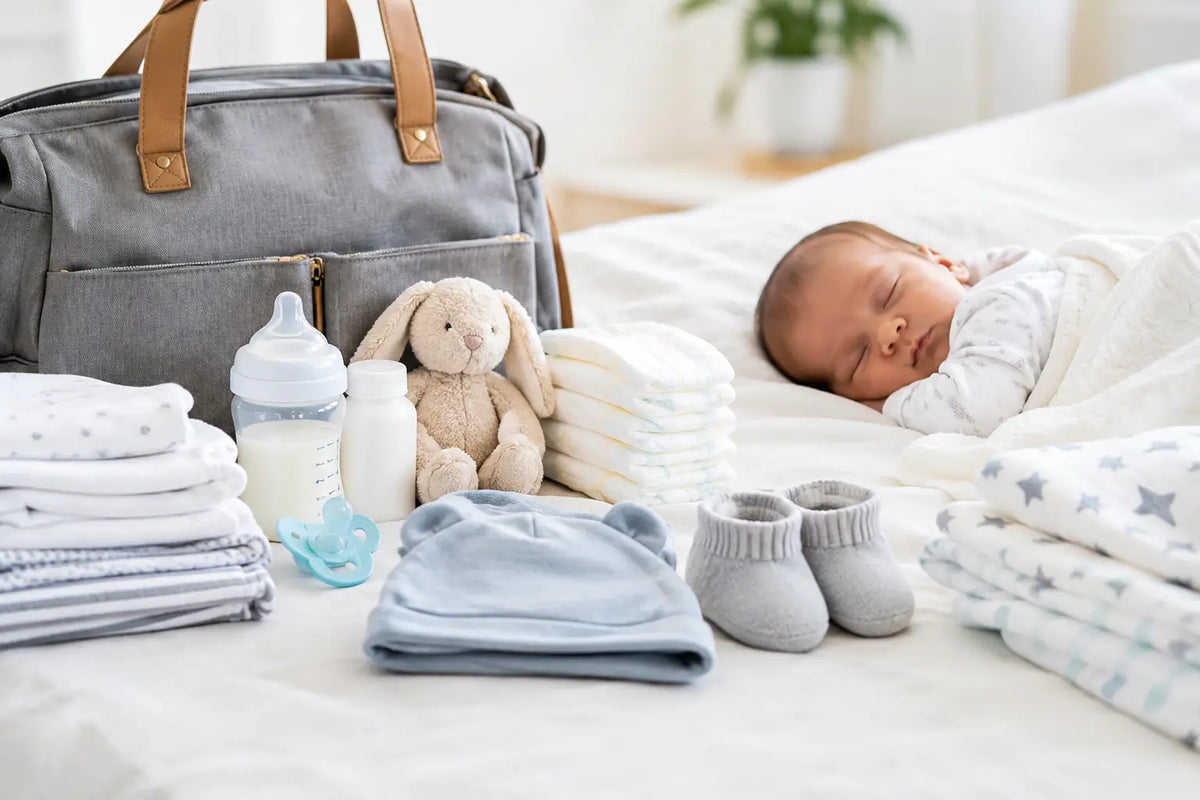
This gives you options without leaving you with a cupboard full of nappies that no longer fit. Once your baby is home, you will quickly see which brand, style and size suits their skin, shape and routine. For parents preparing a hospital bag, pack enough newborn nappies for the expected stay, then keep a small reserve ready at home.
In the UAE, warm weather can make regular nappy changes feel even more important. Change your baby promptly after a poo, and avoid leaving a wet nappy on for long periods, especially if their skin is prone to irritation. Gentle cleansing and allowing the area to dry before putting on a fresh nappy can help keep skin comfortable.
Choose for comfort, not just absorbency
Absorbency matters, but it is only one part of a good newborn nappy. Look for a soft inner layer, stretchy fastenings, breathable materials and a reliable wetness indicator if that helps you during those early, sleep-deprived days. A wetness indicator is particularly handy when the nappy does not feel noticeably heavy yet.
If your baby develops a rash, do not assume the size is the only cause. Rashes can be linked to prolonged dampness, sensitive skin, friction, a change in wipes or products, or a tummy upset. A correctly sized nappy should not rub or pinch, but changing more frequently and using a simple barrier cream where appropriate may also help. Seek professional advice for a severe, spreading, blistered or persistent rash.
A simple check at every change
Before you dress your baby, check that the waistband sits below the cord area, both leg cuffs are out, and the nappy is neither pulling at the tabs nor drooping at the bottom. These few seconds are more useful than relying on a size label alone.
Baby Life brings together everyday nappy-changing essentials, from nappies and wipes to changing mats and gentle bath-time care, so you can build a routine that works for your family in one place.
Your newborn will not stay in their first nappy size for long. Start small, watch the fit rather than the calendar, and let your baby’s comfort guide the next pack you choose.