
Infant Carrier Versus Wrap: Which Fits Your Day?
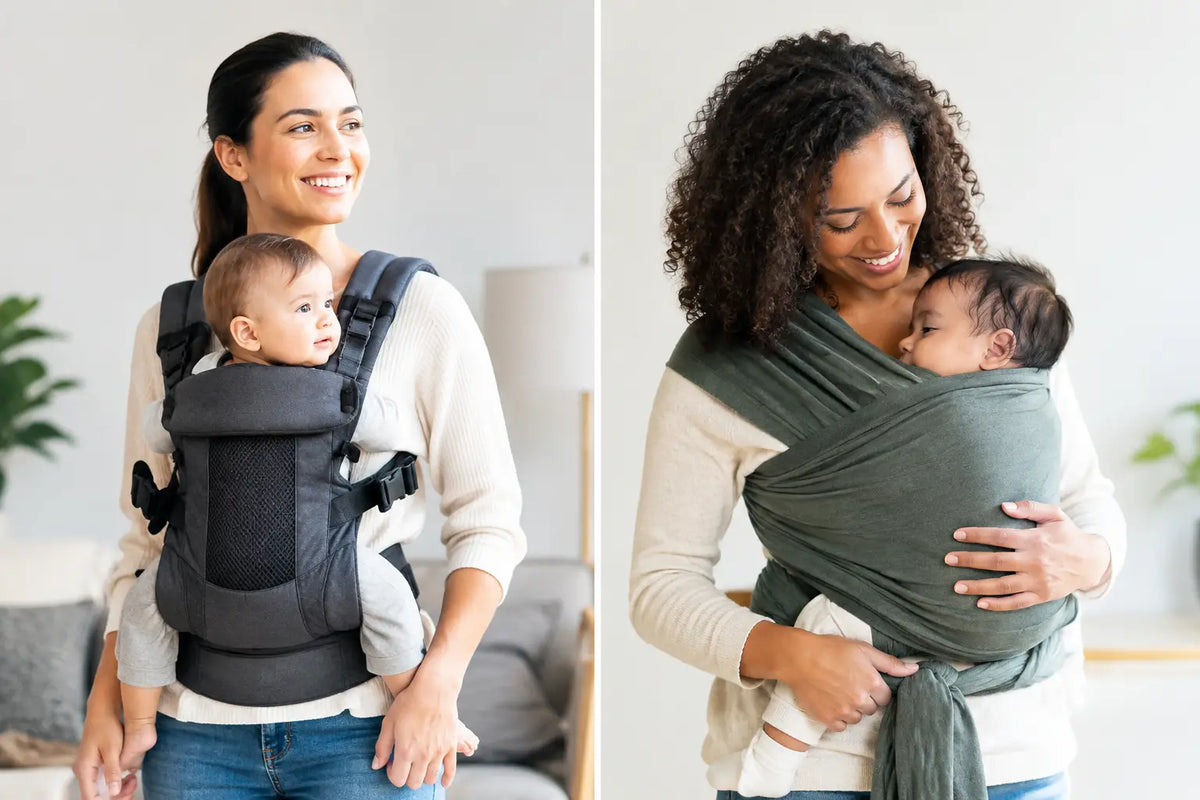
The choice between an infant carrier versus wrap often becomes most pressing when your baby only settles close to you and there are bottles to wash, meals to make or a school run to manage. Both can keep your little one comforted while giving you more freedom to move. The right option is not simply the one that looks easiest online. It is the one that supports your baby safely and feels manageable for your body, routine and confidence level.
A structured carrier and a fabric wrap can both become useful parts of family life. Their strengths are different, though, and understanding those differences can make shopping for babywearing essentials feel far less overwhelming.
Infant carrier versus wrap: the key difference
An infant carrier, often called a structured or soft-structured carrier, has a shaped seat, padded shoulder straps and a waistband that fastens with buckles. It is designed to offer a defined fit with fewer adjustments once you have set it to your body and baby’s stage. Many parents appreciate being able to put it on quickly before heading out, especially when they are managing a changing bag, buggy or other children.
A baby wrap is a long piece of soft fabric that you tie around yourself to create a supportive pouch for your baby. Stretchy wraps are commonly used in the early newborn months, while woven wraps can support babies for longer when tied correctly. A wrap gives a close, cosy fit and can mould around you and your baby rather than relying on a fixed structure.
Neither choice is automatically better. A carrier may suit a parent who wants predictable fastenings and quick transfers, while a wrap may feel more comfortable to someone who values a close, custom fit for a tiny newborn.
When a structured infant carrier makes sense
A carrier can be a practical choice for families who expect to use babywearing regularly outside the home. Once the straps and waistband are adjusted, it is usually quick to put on and take off. This is helpful for short walks, supermarket trips, airport queues and those moments when your baby wants to be held just as you need both hands free.
The waistband is designed to spread some of your baby’s weight across your hips, while padded straps support the shoulders. As your baby gets heavier, that more structured support can feel particularly welcome. Some carriers also offer several carrying positions, such as front inward-facing, hip carrying or back carrying, but these should always be used only when your baby meets the manufacturer’s age, weight and developmental guidance.
The trade-off is that carriers can feel bulkier than a wrap, especially in warm weather or when packed into a changing bag. Buckles and adjustment points also take a little time to learn. If more than one adult will use the carrier, each person may need to reset the fit rather than simply putting it on.
Look for adjustability, not just age labels
A carrier described as suitable from birth should still fit your individual newborn correctly. Check that the seat supports your baby from knee to knee without forcing their legs wide apart, and that the back panel does not come too high behind their head. Some designs need a newborn insert or a narrowed seat setting in the earliest weeks.
Choose a carrier with clear instructions, supportive straps and adjustments that you can reach comfortably. Trying it on with your baby, when possible, is more useful than choosing by appearance alone. The best carrier should feel secure without leaving pressure points across your shoulders, back or waist.
Why many parents love a baby wrap
A wrap can feel wonderfully gentle in the fourth trimester, when many babies want the familiar warmth and motion of being held. The fabric spreads broadly across the wearer’s shoulders and back, avoiding the concentrated pressure that some people notice with narrower straps. Because you create the fit yourself, it can work well across changing postpartum body shapes too.
Stretchy wraps tend to be more forgiving for beginners. You can often tie the wrap before placing your baby inside, then settle them into the fabric with careful checks. Woven wraps offer more longevity and flexibility, but their tying methods can take practice. There is no shame in needing a few attempts before it feels natural.
The main consideration is learning time. A wrap needs to be tied snugly enough to hold your baby close, but not so tightly that you are uncomfortable. Extra fabric can be inconvenient on wet pavements, sandy ground or busy car parks, and warm layers of fabric may not be everyone’s favourite in high temperatures.
A wrap should feel close, not loose
Newborns do not need a loose, hammock-like seat. Your baby should be held upright against your chest, close enough that you can kiss the top of their head without straining. The fabric should support their back and bottom securely, with their face visible at all times.
If you can feel your baby slumping, if there is fabric covering their face, or if you are unsure whether their airway is clear, take them out and try again. A short pause to reset the fit is always worthwhile.
Comfort depends on both wearer and baby
Babywearing comfort is personal. One parent may prefer the hug-like feel of a stretchy wrap, while another may find the buckle system of a carrier much more reassuring. Your baby’s preferences can change too. A newborn may settle beautifully in a wrap, then become more content in a structured carrier as they grow heavier and more alert.
Consider when you are most likely to use it. For soothing at home, contact naps while supervised, or quiet walks in the early weeks, a wrap may be enough. For daily errands, longer outings and carrying an older baby, a structured carrier may offer the speed and support your family needs. Some parents choose one of each, using a wrap during the newborn stage and a carrier as part of their everyday travel gear later on.
Weather matters in the UAE as well. Breathable natural fabrics, light clothing layers and shade can make babywearing more comfortable, but no carrier or wrap removes the need to watch for overheating. Check your baby regularly, move into a cooler space when needed and remove extra layers rather than relying on the carrier fabric alone.
Safety checks for every carry
Whether you choose a carrier or a wrap, safe positioning matters more than the style. Follow the product instructions exactly, including its weight limits and guidance on when each carry position is appropriate. A well-made babywearing product is only safe when it is fitted and used correctly.
Keep these checks in mind every time you wear your baby:
- Keep your baby close enough to kiss, high on your chest and in view.
- Make sure their nose and mouth remain completely clear of fabric, clothing and your body.
- Support their back in a natural position and keep their chin lifted away from their chest.
- Ensure the seat supports their thighs comfortably, with the knees gently higher than their bottom where the product instructions advise this.
- Check buckles, clips, knots and fabric before leaving the house, and bend at the knees rather than from the waist.
How to make the choice easier
Start with the stage you are shopping for, but do not let one label make the decision for you. If you want a simple solution for a newborn and expect to wear your baby mainly indoors, a soft stretchy wrap may feel like the natural first step. If you want a dependable option for school runs, travelling and hands-free errands, an adjustable infant carrier may quickly become a daily essential.
Pay attention to fabric, cleaning instructions and storage too. Babies spit up, nappies leak and life gets messy. A washable option that you can fit without stress is more likely to be used. It can also help to choose neutral, practical colours that work with your usual wardrobe, though comfort and correct fit should always come first.
At Baby Life, parents can explore babywearing essentials alongside the changing, travel and nursery products that make everyday routines easier. Choose the option that gives you confidence to respond to your baby’s need for closeness while still moving through the day in comfort.