Infant Carrier Reviews for Everyday Comfort

A carrier can turn the small jobs that fill life with a baby - settling them after a feed, collecting a sibling, walking through the supermarket - into moments when you still have both hands free. But infant carrier reviews can feel contradictory because the best choice depends as much on your baby, body and routine as it does on the carrier itself.
A glowing review from a parent who uses a carrier for short naps at home may not help someone planning long walks, regular travel or school runs in warm weather. Rather than searching for one perfect model, look for the features that make a carrier safe, supportive and genuinely easy for your family to use.
How to read infant carrier reviews usefully
Start by checking who has written the review and how they use their carrier. Details such as the baby’s age, the parent’s height, whether they have had a caesarean birth, and how long they carry for can explain very different experiences of the same product.
Pay closest attention to repeated comments. If several parents mention difficult buckles, straps that loosen during wear or an awkward newborn adjustment, treat that as useful information. Equally, repeated praise for clear instructions, a supportive waistband or an easy fit is more meaningful than a general comment that a carrier is “lovely”.
Photos and videos can be especially helpful, but use them carefully. A carrier may look compact in a product image while feeling bulky once its straps and padded waistband are adjusted to your body. Look for reviews that show the carrier in use from the front and side, with the baby properly positioned.
Comfort is personal. A petite parent may find a wide waistband overwhelming, while a taller parent may want longer shoulder straps. If more than one adult will use the carrier, prioritise a design with straightforward adjustments so it can be resized without a lengthy struggle each time.
The fit that matters most: your baby’s position
A carrier should hold your baby close enough for you to kiss the top of their head, with their airway visible and clear. Their chin should not be pressed into their chest, and their face should never be covered by fabric, your clothing or the carrier panel.
For younger babies, head and neck support is essential until they have reliable head control. Follow the manufacturer’s age, weight and sizing guidance exactly, including any newborn inserts or seat adjustments. Do not assume that a carrier labelled from birth will fit every newborn without adjustment.
The seat should support your baby from one knee to the other in a comfortable, natural position, rather than allowing their legs to dangle straight down. Their back should be supported without being forced flat. Reviews can tell you whether these adjustments are simple to make, but the instruction manual should always be your final guide for safe use.
As your child grows, the carrier needs can change. A carrier that feels excellent for a newborn’s short daytime naps may not provide enough support for a heavier, active baby. Check the maximum weight limit, but also look for reviews from parents carrying children at a similar stage to yours. A stated limit does not automatically mean it will remain comfortable for every wearer up to that point.
Choosing a carrier style for your routine
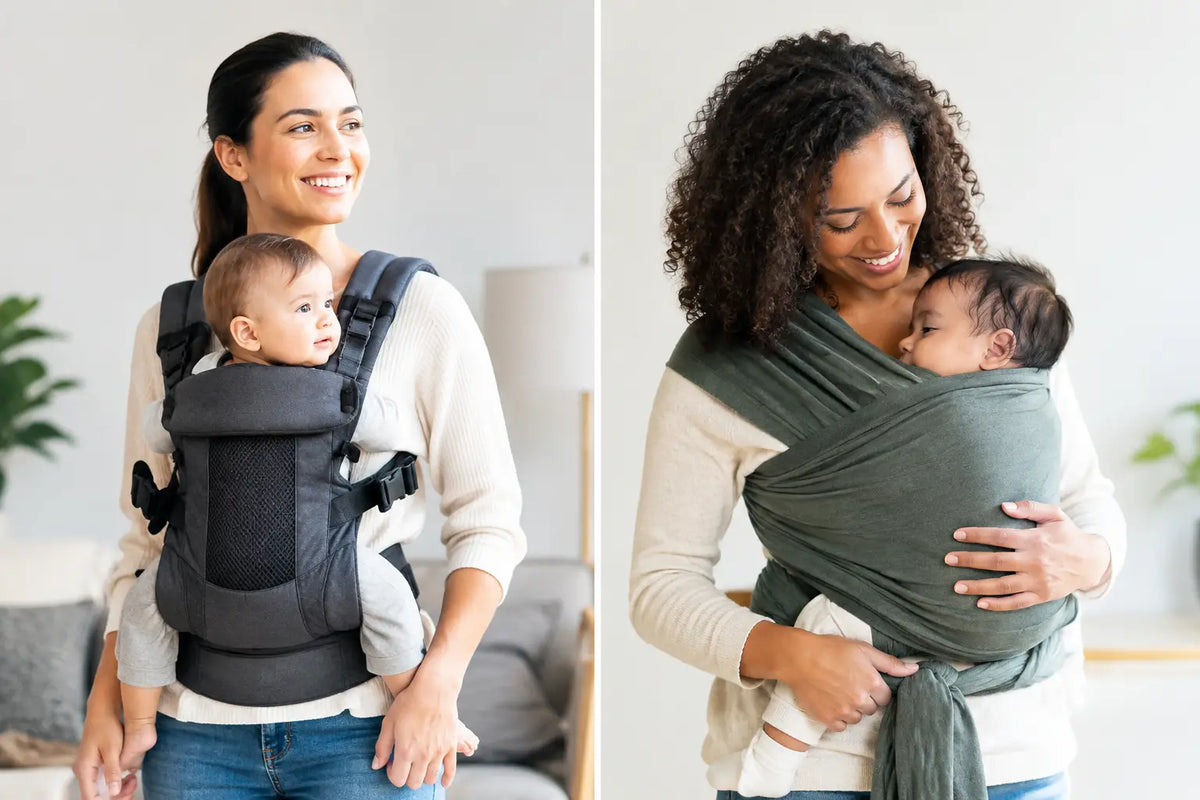
There is no single style that suits every family. Structured buckle carriers are popular for their padded straps, supportive waistbands and quick adjustment. They can be a practical everyday option when different caregivers share carrying duties, although they may take a little longer to fit correctly around a small newborn.
Soft fabric carriers and wraps can feel close and cosy during the early months. Some parents appreciate the gentle fit and lighter feel around the house. The trade-off is that they may need more practice to tie or adjust, and thicker fabric can feel warm during longer periods of wear.
Ring slings are useful for quick ups and downs, particularly when a baby wants to be held for short stretches. Because weight is carried over one shoulder, they may be less comfortable for long walks or extended carrying. Reviews are most useful here when they explain how the fabric sits across the shoulder and whether the rings are easy to tighten safely.
Hip seats and combination carriers can be helpful once your baby has good head and trunk control and wants to be picked up frequently. They offer a quick resting place for a child, but may not replace a full carrier for hands-free naps or longer outings. Consider your most common use first, rather than buying for every possible occasion.
Comfort for the person doing the carrying
A well-fitted carrier distributes your baby’s weight across your shoulders, back and hips. Look for wide, cushioned shoulder straps and a waistband that feels secure without digging in. A structured carrier should not leave all the pressure on your lower back, while a wrap should spread fabric broadly across your shoulders rather than forming a narrow band.
Try your carrier at home before relying on it outside. Begin with ten or fifteen minutes, then notice where you feel pressure. Minor adjustment can make a major difference: raising the waistband, tightening the straps evenly or ensuring the panel is centred can improve comfort quickly.
Postpartum comfort deserves particular attention. If you are recovering from a caesarean birth or have tenderness around your abdomen, a firm waistband may be uncomfortable at first. A softer option or a higher waistband position may suit you better, but listen to your body and seek medical advice for pain that persists.
Fabrics and practical details for UAE families
In the UAE, breathable materials are more than a nice extra. Lightweight mesh panels, cotton blends and moisture-managing fabrics can help on warm days, though no carrier removes the need to manage heat carefully. Dress your baby in light layers, keep outings shorter in high temperatures and check their neck and chest regularly for overheating.
A machine-washable carrier can save considerable time when milk spills, dribbles and everyday mess happen. Check whether the full carrier can be washed or only selected parts, and whether the fabric dries quickly. Darker colours may hide marks, while lighter shades can feel cooler in bright conditions but show stains sooner.
Small features can make a carrier easier to live with. A pocket for keys, a removable bib or dribble pad, a sun hood, and straps that can be rolled away all have value if they match your routine. They should not outweigh fit and safety, but they often determine whether a carrier gets used every day or stays in a cupboard.
A sensible checklist before you buy
Before choosing, confirm that the carrier suits your baby’s current size and developmental stage, supports a clear airway and provides the right level of head support. Then consider whether the main caregiver can put it on and adjust it confidently, whether it is comfortable after a short trial, and whether the fabric works for your usual environment.
Also think ahead without overbuying. A versatile carrier with adjustable settings can be excellent value if you expect to use it from newborn days into toddlerhood. However, a simple carrier that fits your needs now may be the better purchase if you only plan to use it for short trips or calming time at home.
At Baby Life, parents can compare practical baby essentials in one place and choose with their family’s daily routine in mind. The right carrier is not the one with the most features. It is the one that helps your baby feel secure, lets you move comfortably and makes ordinary days a little easier.