12 Nursery Storage Ideas for a Calmer Room

The most useful nursery storage ideas are not about making every shelf look picture-perfect. They are about reaching for a clean muslin with one hand, finding a fresh nappy before a change becomes urgent, and putting away tiny clothes before they take over the room. A well-organised nursery gives tired parents fewer decisions to make and makes everyday care feel noticeably calmer.
Start by thinking about how the room is used across a full day: changing, feeding, dressing, playing and settling. Each activity needs a small, easy-to-reach home for its essentials. The result does not need to be a large nursery or a matching furniture set. It simply needs to work for your family.
Start with the nursery routine, not the storage
Before choosing baskets, boxes or organisers, stand in the room and picture a normal day with your baby. Where will you change nappies? Where will night feeds happen? Which clothes are worn most often? Storage placed beside the activity it supports will save more time than storage that merely looks tidy.
Keep daily essentials within arm’s reach, while reserves can live higher up or in deeper drawers. For example, the changing area needs nappies, wipes, nappy cream, a changing mat cover and spare clothes. The rest of the nappy stock can be stored elsewhere. This simple distinction prevents every surface from becoming a holding area for supplies.
1. Give the changing station its own supplies
A changing table, dresser top or compact changing unit becomes far more practical with a few clearly defined zones. Use an open caddy or divided basket for the items you use at every change. It is particularly useful if you may move between the nursery and your bedroom during the newborn stage.
Place heavier packs of nappies in a low drawer or on a stable shelf, rather than overfilling the top of the changing unit. Keep creams and grooming items together in a smaller container, so they do not disappear among wipes and spare vests. Always avoid placing storage that could fall within your baby’s reach.
2. Use drawer dividers for tiny clothes
Baby clothing is small, soft and surprisingly easy to lose in a deep drawer. Drawer dividers turn one large space into easy categories for bodysuits, sleepsuits, socks, bibs and hats. Folding clothes upright rather than stacking them makes each item visible without disturbing the rest.
There is no need to organise by every possible size. A simpler approach is to keep your baby’s current size in the easiest drawer, the next size up in a labelled drawer or box, and outgrown pieces separately. This makes early-morning dressing quicker and helps you spot gaps before laundry day.
3. Make use of vertical wall space
When floor space is limited, walls can do a great deal of the work. Secure wall shelves above adult height can hold books, framed prints, keepsake boxes or display baskets for lighter items. A wall-mounted book ledge also keeps favourite bedtime stories visible, rather than buried in a toy box.
Safety comes first here. Fix shelves properly to the wall, keep them away from the cot and never store heavy items overhead. As your child grows, reassess what is kept on each shelf. A display that is safe for a newborn may not be safe for a curious toddler who can climb.
4. Choose furniture that stores more than one thing
In a nursery, hardworking furniture earns its place. A cot with under-bed storage, a dresser that can support a changing mat, or an ottoman with a secure lid can reduce the need for extra units. This is especially helpful in shared rooms or smaller homes, where clear floor space matters.
The trade-off is access. Under-cot drawers are excellent for spare bedding, seasonal sleeping bags and bulk nappy packs, but not ideal for things needed several times a day. Keep frequently used items in drawers or baskets at waist height, and reserve harder-to-reach storage for back-up supplies.
5. Keep a small night-time feeding basket
Night feeds are easier when the essentials stay together. A compact basket beside your feeding chair can hold muslins, burp cloths, a water bottle, nursing pads, a light blanket and anything else you regularly need. If you bottle feed, use it for clean bibs and other non-prepared items, while following safe guidance for formula preparation and storage.
Choose a basket with no sharp edges and a stable base. It should make the chair area feel more settled, not create another pile on the floor. Refill it during the day so you are not searching for supplies at 3 am.
6. Create a dedicated home for laundry
A nursery laundry basket is a small addition with a big impact. Place it where you naturally remove clothes - often near the changing area or wardrobe - and choose one that is easy to carry. Babies can go through several outfits in a day, so a visible place for worn clothes stops the chair, cot and changing surface becoming laundry storage.
If space allows, keep a small pouch or box nearby for stained items that need soaking or treating. This separates them from clean clothes and avoids discovering an old milk stain days later.
7. Rotate toys instead of displaying everything
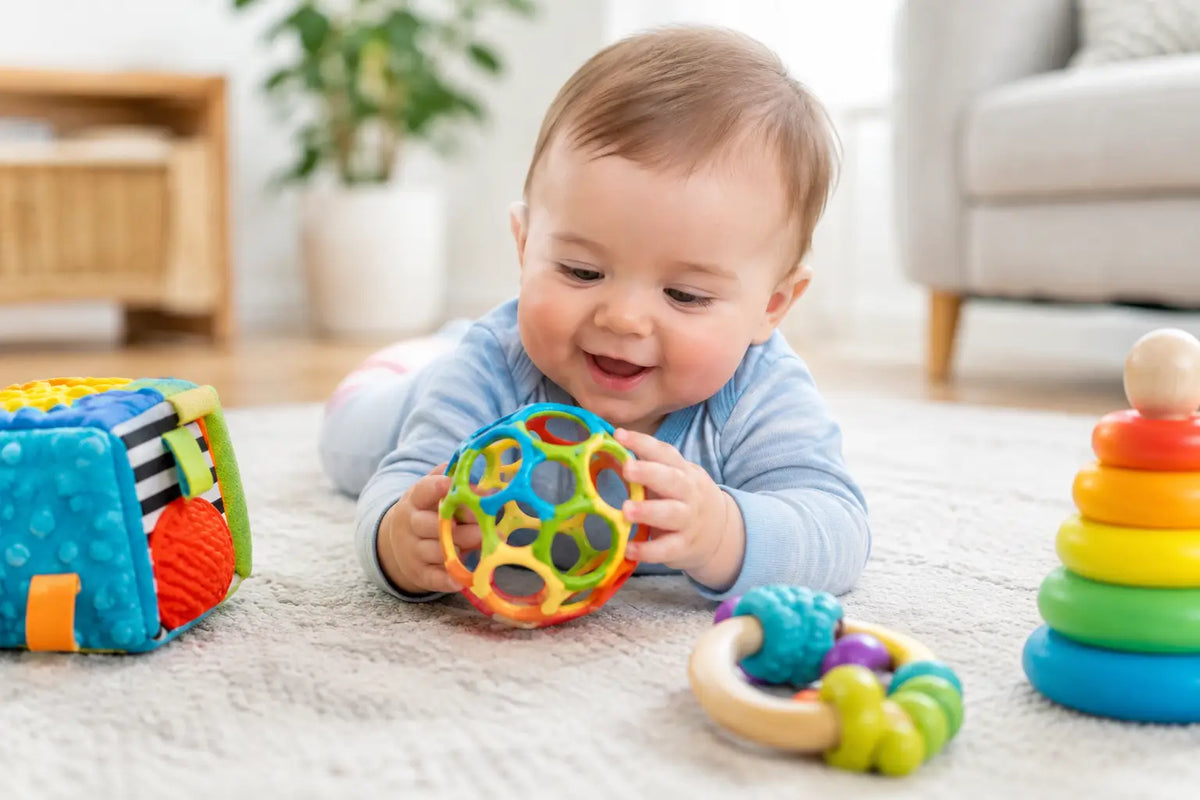
A nursery can feel crowded quickly when every rattle, soft toy and activity set is out at once. Keep a small selection within reach and store the rest in lidded boxes, a cupboard or a labelled basket. Rotating toys every week or two can make familiar items feel interesting again without adding more to the room.
For young babies, less is often more. A few sensory toys, soft books and tummy-time essentials are enough for the day. As your little one becomes mobile, choose storage they can use safely, with lightweight baskets and no pinch points.
8. Store bedding by set
Fitted sheets, waterproof mattress protectors and light blankets are easiest to manage when grouped by type or set. Fold one sheet inside its matching pillowcase where relevant, or keep each cot sheet set together in a labelled fabric box. This prevents a cupboard full of loose linen that is difficult to sort when you need a clean sheet quickly.
Keep two or three clean bedding changes readily available and store extras elsewhere. Babies do create unexpected laundry, but overcrowding the nursery with every spare blanket and sheet makes the useful items harder to find.
9. Use labels that everyone understands
Labels are not only for a styled nursery. They help partners, grandparents and other carers find what they need without asking where everything is. Clear words such as “nappies”, “bibs”, “bath”, “next size” and “spare bedding” are usually more useful than elaborate labels.
Use removable labels for changing categories, particularly clothing sizes and seasonal pieces. They allow the system to grow with your child instead of requiring a complete reorganisation every few months.
10. Keep bath essentials together
Bath products tend to migrate between the bathroom and nursery. A portable bath caddy keeps baby wash, shampoo, a brush, clean towels and a fresh nappy in one place. It is useful for families who bathe their baby in a different room from where they dress them.
Only carry what you need, and store products safely out of reach after use. A caddy is for convenience during the routine, not for leaving products beside a bath unsupervised.
11. Plan for gifts, growth and overflow
New parents often receive clothes and essentials in sizes their baby will not wear for months. Create one clearly marked overflow box for gifts, next-season outfits and duplicate items. Check it every few weeks, especially during rapid growth spurts, so lovely pieces do not remain unworn at the bottom.
Vacuum storage bags can be helpful for bulky seasonal items, but they are less convenient for clothes you need to check often. Fabric boxes or transparent bins are usually better for growing wardrobes because you can see what is waiting.
12. Build in a five-minute reset
The best storage system is one you can maintain when you are tired. At the end of the day, spend five minutes returning clean clothes, refilling the nappy caddy and putting toys back in their basket. This is enough to make tomorrow morning feel easier without turning nursery organisation into another major task.
Baby Life makes it easier to bring these practical pieces together, from nursery furniture and storage-friendly essentials to feeding, bathing and changing supplies. Choose items that suit the space you have and the routines you actually follow, rather than trying to recreate a showroom.
A calm nursery is not one with nothing on display. It is one where every daily essential has a sensible place, the room stays safe as your baby grows, and you can focus more of your energy on the little moments that matter.