When Should Babies Start Solids? A Parent Guide

The first spoonful can feel like a big family milestone, but there is no prize for starting early. If you are wondering when should babies start solids, the most helpful answer is: when your baby is developmentally ready, usually at around six months. Their age matters, but the signs they show matter just as much.
Milk remains your baby’s main source of nutrition throughout the first year. Early meals are about learning: new tastes, textures, chewing movements and the routine of sitting with the family. Starting at the right time helps make that learning safer and more enjoyable for everyone.
When should babies start solids?
Most babies are ready to begin complementary feeding at around six months old. This means offering food alongside breast milk or first infant formula, rather than replacing milk feeds straight away. Some babies look interested in food before six months, but curiosity alone does not mean their bodies are ready to eat it.
Guidance generally recommends waiting until around six months because babies need enough head control and coordination to eat safely. Starting too early can increase the chance of choking and may mean food takes the place of the milk they still need.
For babies born prematurely, the timing can be different. Your paediatrician or health visitor may advise using your baby’s corrected age and looking carefully at their individual development. If your baby has a medical condition, difficulty gaining weight or swallowing concerns, ask a healthcare professional before introducing solids.
Look for these signs of readiness
A baby who is ready for solids will show several signs together over time. They should be able to stay in a seated position with steady head and neck control, ideally in a supportive high chair. They also need to coordinate their eyes, hands and mouth well enough to look at food, pick it up or accept it from a spoon, and bring it towards their mouth.
Another clear sign is that your baby can swallow food rather than automatically pushing it back out with their tongue. The tongue-thrust reflex is normal in younger babies, but it makes eating solids difficult. A baby who watches you eat or reaches for your plate may be curious, yet this should be paired with the physical signs above.
Waking more often at night, chewing fists and wanting extra milk are not reliable signs that a baby needs solids. Growth spurts, teething, comfort and changes in routine can all explain these behaviours. Offer their usual milk feeds and speak to a health professional if you are concerned about hunger or weight gain.
Set up a safe, comfortable first meal
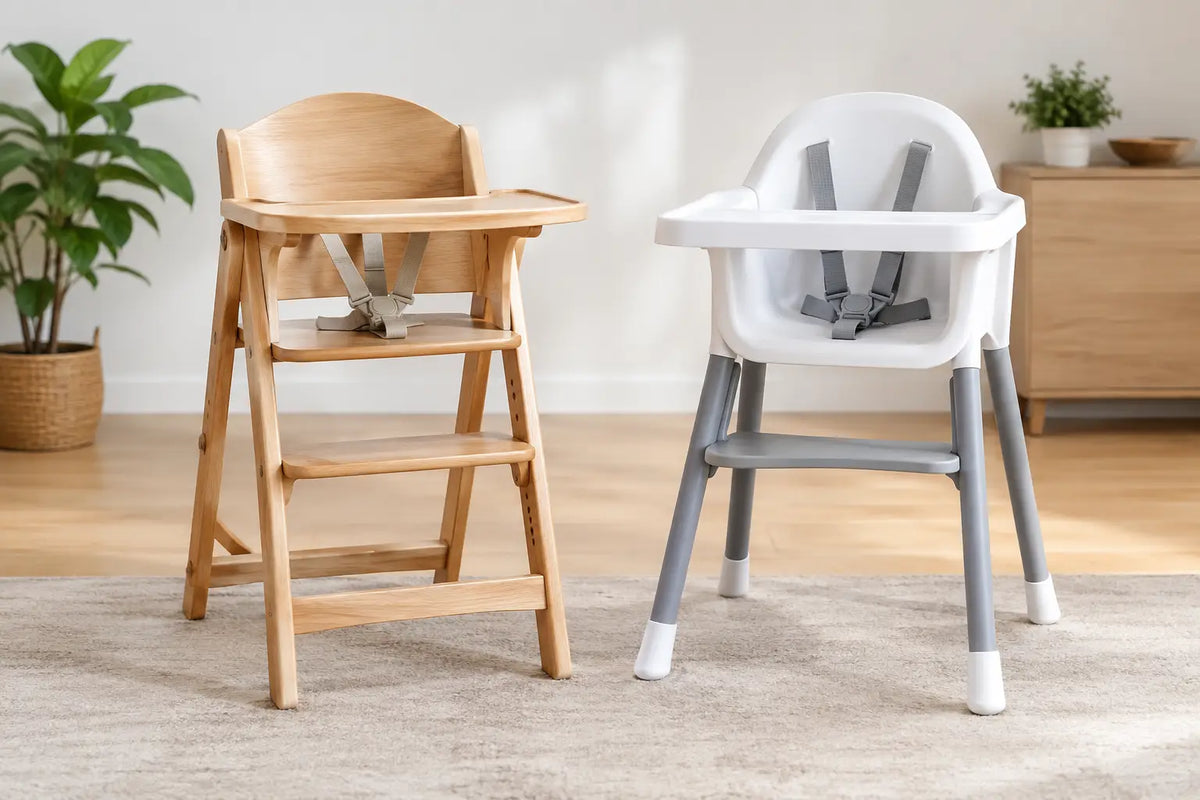
The right seat makes a real difference. Choose a high chair with a firm, upright back, a secure harness and foot support if possible. Your baby should never eat reclined in a bouncer, car seat, pushchair or lying down. Stay beside them throughout the meal, even once they seem confident.
Start when your baby is rested and reasonably content, rather than extremely hungry or tired. A small milk feed beforehand can take the edge off hunger, leaving them calmer and more willing to explore. One short meal a day is enough at first. It may only involve a few tastes, a squashed finger of food or plenty of mess.
A washable bib, easy-clean high-chair tray and small open cup can make the routine simpler. Keep a cloth nearby, but try not to wipe your baby’s face after every bite. They are learning through touch as well as taste, and a little mess is part of the process.
First foods: keep them simple and varied
There is no single perfect first food. Soft vegetables, fruit, porridge, plain yoghurt, well-cooked egg, beans, lentils, fish and tender meat can all have a place. Aim for a variety of flavours and textures across the week rather than relying on sweet foods alone.
Iron-rich foods are especially useful from around six months, as a baby’s iron stores begin to reduce. Offer options such as smooth or mashed lentils, beans, eggs, meat, poultry, fish and iron-fortified baby cereal. Pair plant-based iron sources with fruit or vegetables containing vitamin C, such as broccoli, peppers, strawberries or orange segments with the peel and pips removed, to support absorption.
You can begin with spoon-fed mashed food, baby-led finger foods, or a combination of both. What matters is that the food is soft enough to squash easily between your fingers and is served in a size your baby can manage. For example, offer a thick strip of soft-cooked sweet potato, a ripe avocado wedge, or a pre-loaded spoon of porridge.
At first, your baby may eat very little. That is expected. Continue breast milk or first infant formula on demand, and gradually build from one meal to two and then three as their appetite and skills develop. Around six months, offer small sips of water from an open or free-flow cup with meals.
Foods and habits to avoid
Food safety deserves extra attention during this stage. Avoid adding salt or sugar to your baby’s meals, and do not give honey before 12 months because of the risk of infant botulism. Cow’s milk can be used in cooking or mixed into food from around six months, but it should not replace breast milk or formula as their main drink until after 12 months.
Some foods are choking hazards even for older children. Keep whole nuts, popcorn, hard raw apple and carrot, whole grapes, cherries, sweets and spoonfuls of sticky nut butter off the menu. Cut grapes, cherry tomatoes and similar round foods lengthways into quarters, grate or cook firm fruit and vegetables until soft, and spread nut butter thinly onto toast or mix it into porridge.
Avoid rice drinks for children under five, and choose low-mercury fish rather than shark, swordfish or marlin. Make sure eggs are thoroughly cooked unless they carry an appropriate safety mark. Wash hands, surfaces and utensils carefully, cook food properly and cool it before serving.
Introducing allergens with confidence
Once your baby is ready for solids, common allergens can be introduced one at a time in smooth, safe forms. These include egg, peanut, tree nuts, sesame, milk, wheat, soya, fish and shellfish. Introducing them early in suitable textures may help your baby become familiar with them.
Offer a very small amount in the morning or early afternoon, when you can observe your baby. For example, try well-cooked egg, smooth peanut butter thinned with water or mixed into porridge, or plain yoghurt. If there is no reaction, keep that food in their diet regularly in an age-appropriate form.
Seek medical advice before introducing allergens if your baby has severe eczema, a known food allergy or has previously reacted to food. Signs of an allergic reaction can include hives, swelling of the lips or face, vomiting, coughing, wheezing or sudden unusual drowsiness. Call emergency services immediately if your baby has trouble breathing, becomes floppy or seems seriously unwell.
Let progress happen at your baby’s pace
Solids are not always a smooth, linear journey. One day your baby may happily explore broccoli; the next, they may turn away from everything. Teething, illness, tiredness and unfamiliar surroundings can all affect appetite. Keep offering without pressure, and avoid distracting them with screens or persuading them to take “just one more” bite.
As confidence grows, move beyond very smooth purées. Lumpy mashed food and soft finger foods help babies practise chewing and develop the skills they need for family meals. Continue to adapt foods safely - cook vegetables until tender, remove bones and pips, and cut food to suit your baby’s stage.
Building a calm feeding routine is often more valuable than getting a certain number of spoonfuls eaten. With a supportive seat, practical feeding essentials and a little patience, every shared meal becomes another small step towards confident eating.