What Helps With Newborn Nappy Rash at Home?

A freshly changed nappy should feel like a comfort, not a source of tears. Yet newborn nappy rash is one of the most common worries in the early weeks, especially when feeds, nappies and laundry seem to fill the entire day. The good news is that most mild rashes settle with simple, consistent care. The key is to protect delicate skin while knowing when a rash needs advice from a healthcare professional.
What newborn nappy rash looks like
Nappy rash usually appears as pink, red or irritated skin on the bottom, genitals and upper thighs. It may look patchy at first, then become more inflamed if the skin stays damp or rubs against the nappy. Your baby may fuss during changes or cry when the area is cleaned, particularly if the skin is sore.
Newborn skin is very thin and sensitive. Even with excellent nappy changes, a rash can develop quickly. Urine and poo irritate the skin, while moisture trapped against the bottom weakens its natural protective barrier. Friction from a close-fitting nappy can add to the problem.
A mild rash is usually flat and red. If you notice spots, blisters, broken skin, weeping areas or a rash that spreads into the skin folds, it may not be simple irritation. This is a good time to seek medical guidance rather than trying several new products at once.
Why nappy rash happens
There is rarely one single cause. A baby who has frequent bowel movements, diarrhoea, or a change in feeding routine may be more prone to irritation because their skin is in contact with poo more often. Teething is often blamed for nappy rash, but the more likely link is a change in bowel movements or extra saliva being swallowed, which can affect stools.
Some babies also react to fragranced wipes, soaps, bubble baths or a particular nappy material. A nappy that is too small can chafe, while a nappy that is much too large may allow leaks and dampness around the legs. It is often a matter of finding the combination that keeps your baby dry, comfortable and secure.
Antibiotics can occasionally be linked with a thrush-type rash. This tends to be bright red, may affect the creases of the skin, and can have small red spots around the main rash. A pharmacist, health visitor, GP or paediatrician can advise on the right treatment.
Gentle care for newborn nappy rash
When the skin is sore, less is often more. Change your baby as soon as possible after a wet or dirty nappy, including overnight when needed. Frequent changes reduce the time that moisture and irritants sit against the skin.
At each change, clean gently using lukewarm water and soft cotton wool or a clean, soft cloth. Fragrance-free, alcohol-free wipes can be practical when you are out with your baby, but water may be kinder while the skin is irritated. Avoid rubbing. Instead, dab carefully and take a moment to dry the skin, especially around the folds.
Give the bottom a little nappy-free time once or twice a day if you can. Place a towel or washable changing mat underneath and let the area air dry for a few minutes. It does not need to be a long session to help, and it can make changes feel less rushed for both of you.
A simple barrier cream can protect the skin from wetness at every change. Apply a thin, even layer to clean, dry skin. There is no need to scrub off every trace of cream before the next nappy change, as this can further irritate the area. Remove only what is soiled, clean gently and reapply as needed.
Choose a fresh, absorbent nappy in the right size and fasten it comfortably rather than tightly. You should be able to fit a finger around the waistband. If you suspect a product is irritating your baby’s skin, switch one item at a time, such as wipes or nappies, so it is easier to identify what has helped.
A simple change-time routine
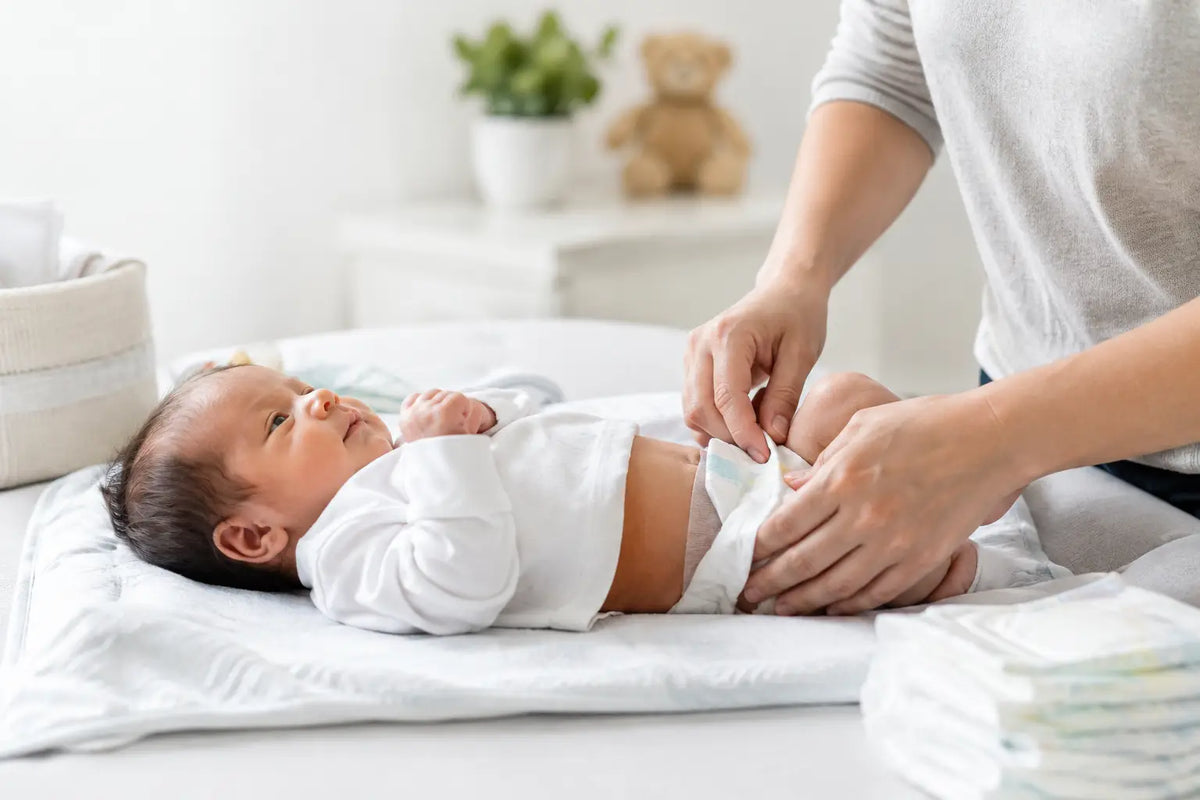
For a mild rash, keep the routine calm and consistent: remove the soiled nappy, clean with water or a suitable gentle wipe, pat dry, apply barrier cream and put on a clean nappy. Repeating these steps at every change is more useful than using lots of different creams or cleansers.
For families preparing a changing area, it helps to keep the essentials within reach: nappies, gentle wipes or cotton wool, a soft towel, barrier cream and a changing mat. A well-organised station makes those frequent newborn changes quicker, particularly during the night.
What to avoid while skin heals
Avoid scented products, talcum powder and strong soaps on a sore bottom. Powder can be inhaled by babies and may clump on damp skin, while perfumed products can sting or trigger more irritation. Do not use antiseptic, steroid, antifungal or medicated creams unless a pharmacist or clinician has recommended them for your baby.
It can be tempting to change brands repeatedly when a rash appears. However, several changes at once can make the cause harder to work out. Start with the basics: more frequent changes, gentle cleaning, careful drying and a protective barrier. If there is no clear improvement, ask for advice before adding treatment.
Cloth nappies can be a good choice for many families, but they need thorough washing and rinsing to avoid detergent residue. Disposable nappies should be changed regularly and fitted correctly. Neither option is automatically better for every baby. The best choice is the one that keeps your newborn dry and suits your family’s daily routine.
When to seek medical advice
Contact a healthcare professional if the rash is severe, blistered, bleeding, weeping, crusty or painful enough that your baby is very distressed. Seek advice if your newborn has a fever, seems unwell, is feeding poorly, or if the rash spreads beyond the nappy area.
It is also sensible to ask for help if the rash has not started to improve after two to three days of gentle home care, or if it keeps returning. A clinician can check for thrush, eczema, bacterial infection or another skin condition that may need specific treatment.
For babies under three months, trust your instincts. Newborns can become unwell quickly, and it is always appropriate to seek prompt medical advice if you are worried about your baby’s health, not only their skin.
Building a kinder nappy routine
Nappy changes are one of the many small rituals that shape the newborn days. Keeping the space warm, speaking softly and having practical essentials ready can turn an uncomfortable moment into one that feels reassuring. Baby Life brings together everyday nappy-changing and bathing essentials so parents can prepare for those regular care moments with less last-minute searching.
Most newborn nappy rash improves when skin is kept clean, dry and protected. Be patient with the healing process, stay gentle with your baby’s skin, and ask for help early if the rash does not look or feel right.