Top Sensory Toys for Infants Parents Can Trust
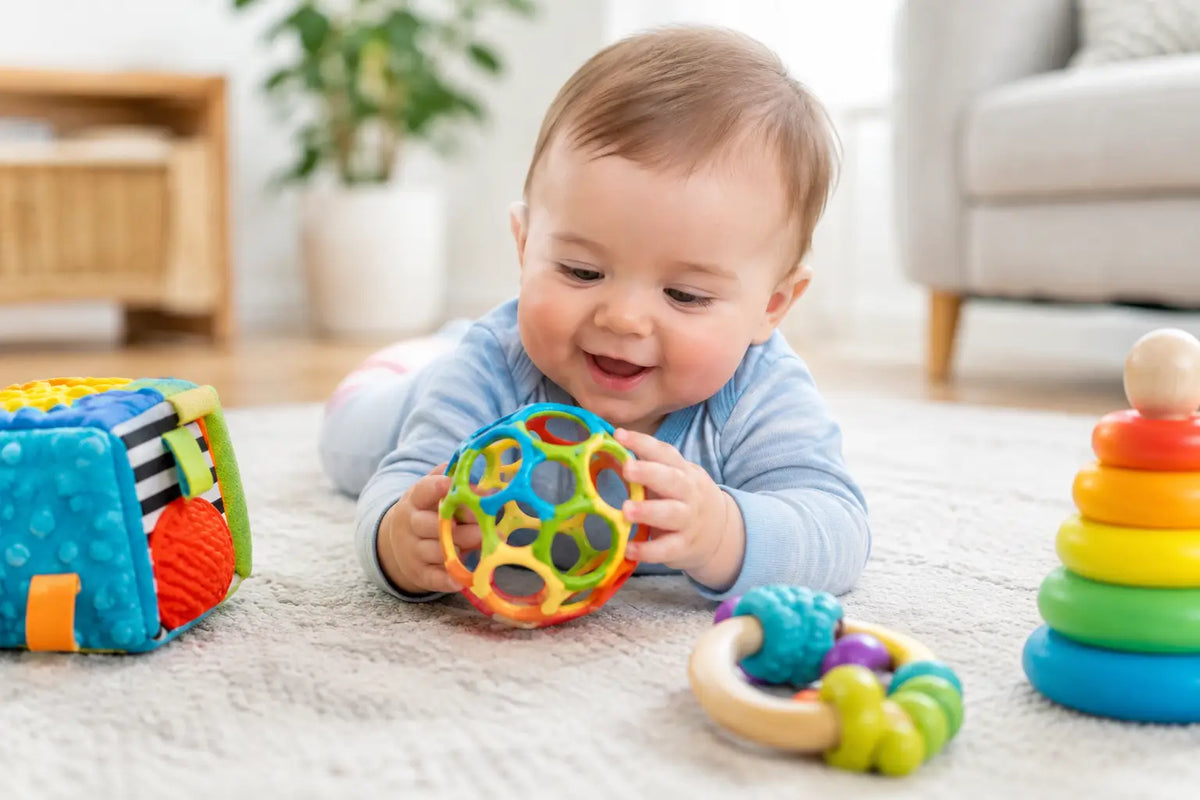
A crinkly sound during nappy-free time, a high-contrast picture beside the changing mat, or a soft textured ball in little hands can turn an ordinary moment into play. When choosing the top sensory toys infants can use safely, the best option is rarely the noisiest or most complicated one. It is the toy that suits your baby’s stage, feels good to explore and is easy to use again and again.
Sensory play gives babies gentle opportunities to notice different sights, sounds, textures and movements. It does not need a room full of equipment. A small, carefully chosen collection can support curious everyday play while keeping life simple for busy parents.
What makes a sensory toy right for an infant?
Infants learn through their senses long before they can explain what interests them. In the early months, babies may follow a bold pattern with their eyes, listen to a familiar rattle or calm when they grasp a soft comforter. As their control develops, they begin to reach, squeeze, shake, mouth and pass toys from one hand to the other.
A good sensory toy invites this kind of exploration without asking too much of your baby. Look for materials that are soft or smooth, colours and patterns that are clear rather than overwhelming, and features that respond gently when touched. A light rattle, for example, gives a baby a simple cause-and-effect experience: move it, and it makes a sound.
The right choice also depends on the moment. A quiet cloth book may work beautifully before a nap, while a play gym can offer a more active tummy-time activity. There is no need to push every sense at once. Many babies engage more happily with one or two features than with flashing lights, music and multiple textures competing for attention.
Top sensory toys for infants by stage
Newborn to around 3 months: seeing, hearing and settling
Newborns are still adjusting to the world around them, so simple visual and sound-based toys are often most useful. High-contrast black-and-white cards or fabric books are a lovely choice for short periods of alert play. Place them within your baby’s line of sight during supervised floor time or alongside the changing area.
Soft musical toys and gentle rattles can also be introduced when used by an adult nearby. Choose a quiet, pleasant sound rather than a harsh or very loud one. At this stage, your baby may not hold the toy for long, but they can watch it move and listen as you shake it slowly.
A baby-safe mirror is another everyday favourite. Babies are naturally interested in faces, and a mirror placed securely at floor level can make tummy time more engaging. Always use a mirror designed for babies rather than a household mirror.
Around 3 to 6 months: reaching, grasping and texture
Once your baby begins reaching with more purpose, lightweight toys are especially rewarding. Soft activity cubes, textured fabric books and easy-to-hold rattles offer different surfaces to touch without being difficult to manage. Toys with loops, tags and gentle crinkle panels can be particularly appealing to little fingers.
This is also a common stage for teething, so a suitable teether can earn its place in your sensory toy basket. Look for a product made for mouthing, free from loose pieces and easy to clean. Some babies prefer a soft silicone texture, while others enjoy a firmer teething ring. It may take a little trial and error to find what feels comfortable for your child.
A play gym with a padded mat and a few hanging toys can encourage reaching and kicking. Keep the setup uncluttered. Two or three interesting toys are usually plenty, and changing them occasionally helps keep the experience fresh.
Around 6 to 12 months: movement, discovery and cause and effect
Older infants are often keen to make things happen. Stacking cups, soft blocks, activity balls and simple pop-up or spinning toys can support this growing interest. They may bang, drop, roll or tip toys over repeatedly, which is how they explore weight, sound and movement.
Textured balls are useful because they invite rolling, gripping and two-handed play. Choose one that is large enough not to present a choking risk and soft enough for indoor play. For babies who are sitting, a sturdy activity centre or busy board designed specifically for their age can offer buttons, sliders and shapes to investigate while they are supervised.
Board books with sturdy pages, touch-and-feel areas and clear pictures are another excellent sensory choice. Reading them together adds the reassurance of your voice, while the book itself gives your baby textures and pages to explore. If they are more interested in turning pages than hearing the story, that is perfectly normal.
Sensory toys for tummy time
Tummy time is one of the easiest opportunities to use sensory toys with purpose. Some babies protest at first, especially when they are tired or hungry, so keep sessions short and build up gradually. Getting down on the floor at your baby’s level can make a real difference.
Position a high-contrast card, soft mirror or crinkly book just in front of your baby, then move it slowly from side to side to encourage visual tracking. A water mat or textured play mat can add interest for babies who are beginning to push up on their arms. For a baby who has started to reach, place one lightweight toy slightly to one side so they have a reason to turn their head or shift their weight.
If tummy time is difficult on the floor, supervised time across your lap or chest still counts. The goal is not a perfect setup. It is a comfortable, regular chance for your baby to move and look around.
Safety checks before playtime
Sensory toys should be enjoyable for parents as well as babies, which means safety and upkeep matter as much as colours or features. Before offering any toy, check the recommended age and inspect it closely. Babies explore with their mouths, so a well-made, easy-clean design is worth prioritising.
Keep these checks in mind:
- Choose toys with no small, detachable parts, loose stitching, damaged seams or peeling surfaces.
- Make sure rattles, balls and teethers are too large to become a choking hazard.
- Wash or wipe toys according to the manufacturer’s care instructions, especially teethers and fabric toys used often.
- Supervise play, including tummy time, and remove toys that are worn, cracked or broken.
How many sensory toys does a baby need?
Less than many parents think. A few well-chosen options can provide plenty of variety when you rotate them. You might keep a high-contrast book and rattle for morning floor play, bring out a teether during the day, then use a soft activity toy during an outing or while you prepare a meal nearby.
Toy rotation does not need to be a strict system. Simply put away a couple of toys for a few days and bring them back later. Familiar toys often feel new again, and a smaller selection makes it easier for your baby to focus. It also keeps storage more manageable in nurseries and shared family spaces.
When shopping, it helps to choose toys that suit more than one stage. A fabric book can begin as a visual toy for a young baby, become a reaching toy a few months later and eventually become part of your shared reading routine. This kind of practical versatility makes building a toy collection feel more considered.
Choosing toys with confidence
Trusted baby brands design infant toys with early development, comfort and safe materials in mind, but your own baby remains the best guide. Watch what captures their attention. Some babies love crinkle sounds; others will spend far longer exploring a textured ring or studying their reflection.
At Baby Life, parents can find sensory play essentials alongside the nursery, feeding and everyday items that make life with a little one easier. Start with one toy that matches your baby’s current stage, leave space for calm exploration and let those small moments of curiosity lead the way.