How to Install a Rear Facing Car Seat Safely

The journey home from hospital may be short, but it is the first time your baby will travel in a moving vehicle. Knowing how to install rear facing car seat correctly gives you a calmer start and gives your little one the protection they need. A car seat can look secure at first glance, yet small details - a loose belt path, twisted harness or incorrect recline - can affect how it performs.
Rear-facing travel is the safest position for babies and young children because it supports the head, neck and spine during a sudden stop or collision. The safest choice is to keep your child rear facing for as long as their seat's height or weight limit allows, following both the car seat and vehicle instructions.
Before you install a rear facing car seat
Start with the manuals. Keep the vehicle handbook and car seat instruction booklet beside you while fitting the seat, rather than relying on memory or a video for a similar model. Every seat has its own belt route, recline range, support leg rules and child limits. Your car may also have specific guidance for ISOFIX points, airbag switches and approved seating positions.
Check that the seat is suitable for your child's current height and weight, not simply their age. If you are using an infant carrier, make sure the newborn insert is fitted only as the manufacturer directs. Extra cushions, head supports, strap covers or liners that did not come with the seat should not be added, as they can alter the harness fit.
Choose the rear seat whenever possible. It is generally the best place for a child car seat, and it also makes it easier for an adult to check on your baby safely when parked. Never place a rear-facing seat on a front passenger seat with an active airbag. If the front seat is your only practical option, consult the car and seat manuals carefully and deactivate the airbag only where your vehicle manufacturer permits it.
How to install a rear facing car seat with ISOFIX
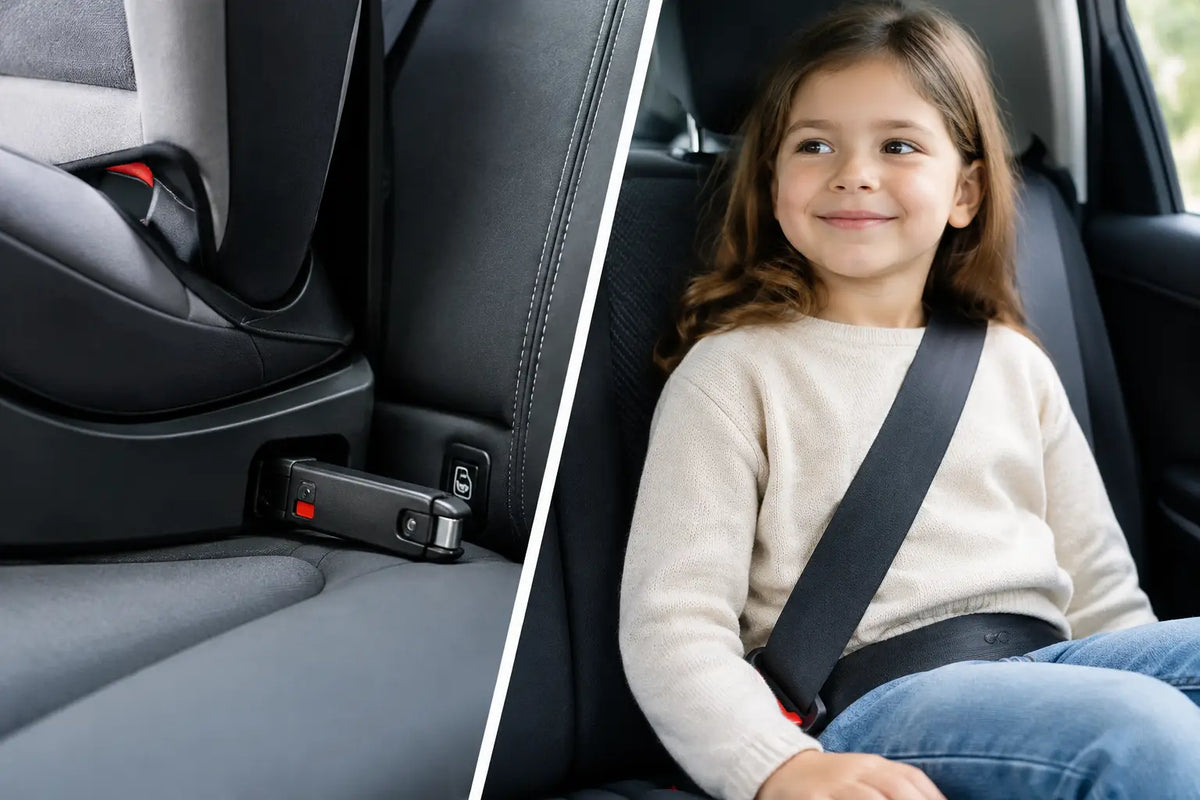
ISOFIX can make fitting straightforward because the seat connects directly to anchor points built into the car. It does not remove the need for careful checks. First, locate the ISOFIX anchors in the vehicle's rear seat - they are often marked with a symbol and may sit behind small fabric flaps or plastic guides.
Set the seat to its rear-facing position and the recommended recline angle. Push each ISOFIX connector onto the anchor points until both indicators show green or the seat gives the confirmation described in its manual. Avoid assuming an audible click alone means the fitting is complete; always inspect both indicators.
Many ISOFIX seats also use either a support leg or a top tether. A support leg must sit firmly on the vehicle floor, not on a storage compartment lid unless the vehicle manual explicitly says this is allowed. Extend it until its indicator confirms correct pressure. Do not raise the seat by overextending the leg.
A top tether is less common on rear-facing seats but is used by some models. Attach it only to the approved tether point or routing location specified by the manufacturer. The tether should be firm, without being pulled so tightly that it changes the seat's recline.
Once fitted, hold the seat close to its belt path or ISOFIX connection and move it side to side and forwards. It should not shift excessively. Some movement at the top of the shell is normal for certain seats, especially those with a support leg, so use the manual's fitting guidance rather than applying a one-rule test to every model.
Using an ISOFIX base with an infant carrier
An infant carrier and base are often a convenient choice for newborn travel. Install the base first, checking the ISOFIX and support-leg indicators. Then click the carrier onto the base and confirm that its own indicator is secure. Before every drive, check that the carry handle is in the position required for travel by that specific carrier.
It is tempting to leave a carrier on the base and assume nothing has changed. A quick check each time matters, especially after another passenger has moved the front seat or items have been placed around the base.
How to fit a rear facing car seat with a seat belt
A belted car seat can be an excellent, safe option when it is fitted exactly as instructed. It is especially useful for cars without ISOFIX, for occasional travel in another vehicle or for seats designed to be installed with either method.
Position the car seat on the chosen vehicle seat at the correct recline angle. Pull the three-point seat belt out fully, then route the lap and diagonal sections through the marked rear-facing belt guides. These guides are often blue, but use the labels and diagrams on your own seat rather than relying on colour alone.
Buckle the belt, remove slack from the lap portion first, then tighten the diagonal section. Press down where the seat manual instructs while tightening. This helps the seat settle into the vehicle upholstery without forcing it into an unsuitable angle. If the seat has a built-in lock-off, close it fully after the belt is tightened.
Make sure the belt is flat throughout its route. A twisted belt can compromise the installation, and a belt sitting outside a guide can leave the seat unstable. Some cars have long buckle stalks or deeply contoured seats that make fitting more complicated. In that case, a different approved seating position, a compatible seat model or a professional fitting check may be the right answer. Never improvise with clips, towels or accessories unless the seat manufacturer specifically supplies or approves them.
Set the recline for your baby's age
For a newborn, correct recline is about more than comfort. If the seat is too upright, a baby's head may fall forwards, which can affect their airway. If it is too reclined, the seat may not protect them as designed or may take up too much space in the vehicle.
Use the seat's angle indicator on level ground. Many seats offer several recline positions, and the permitted setting can differ for newborns, older babies and toddlers. If your vehicle seat slopes sharply, check the manual for approved adjustment methods. Do not use a rolled towel, pool noodle or wedge unless your car seat instructions explicitly allow it.
Secure your child properly every time
A perfectly installed car seat still needs a correctly fitted harness. Place your child with their back flat against the seat and their bottom all the way back. For rear-facing use, harness straps should normally sit at or just below shoulder level, but always follow the height guidance for your model.
Fasten the buckle and tighten the harness until you cannot pinch a horizontal fold of webbing at the shoulder. The chest clip, where fitted, should sit at armpit level. Keep straps flat and untwisted.
Bulky coats, padded snowsuits and thick layers should not be worn under the harness. They compress in a collision, creating dangerous slack. For cooler UAE indoor spaces or early-morning journeys, dress your baby in thin fitted layers and place a blanket over the secured harness if needed. Remove it once the car is warm.
Avoid leaving babies in a car seat for long periods outside travel. Car seats are designed for safe vehicle journeys, not extended sleep at home or in a pushchair. When you arrive, move your baby to a flat, suitable sleep space whenever possible.
Quick checks before you drive
Before setting off, take a moment to check the essentials:
- The seat is rear facing and fitted in an approved vehicle position.
- ISOFIX, support-leg, tether or belt-route indicators are correctly set.
- The recline angle matches your baby's age and the seat instructions.
- The harness is snug, flat and positioned correctly.
- No loose items, toys or bags can become projectiles in a sudden stop.
The right rear-facing seat is one that suits your child, fits your vehicle and can be used correctly on every journey. With a careful installation and a calm pre-drive check, family outings can begin with the reassurance that your smallest passenger is travelling as safely and comfortably as possible.