Cot Bed vs Crib: Which Is Right for Your Baby?

A newborn’s sleep space is one of the first big nursery decisions, and the cot bed vs crib question can feel more complicated than it first appears. Both can give your baby a safe, comfortable place to rest, but they suit different homes, budgets and family routines. The best choice is not always the largest or longest-lasting option - it is the one that works well for your baby and your everyday life.
Cot bed vs crib: the main difference
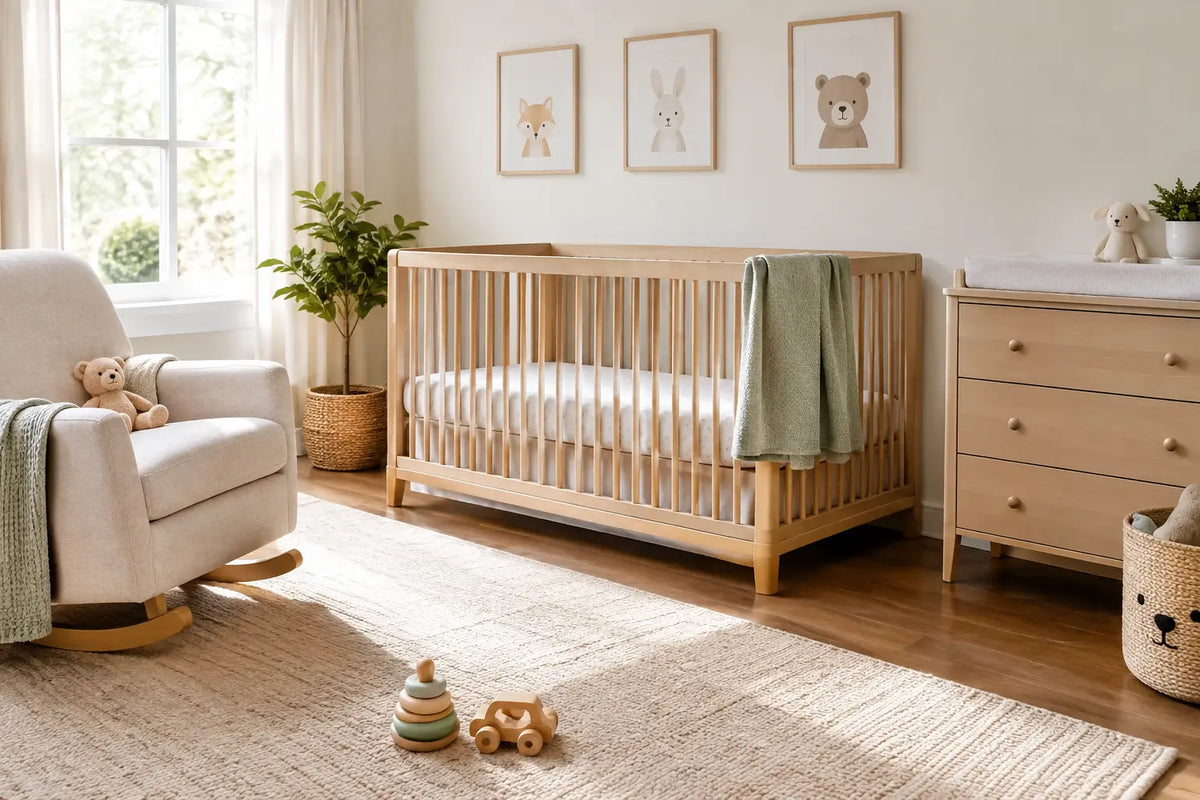
A crib is usually a compact bed designed for babies from birth until they outgrow it, often at around 18 months to two years, depending on the model and your child’s size. In the UK, the word “cot” is commonly used for this type of infant bed. However, when shopping across international brands, “crib” may describe a similar sleep space with fixed sides and a standard baby mattress.
A cot bed is larger and made to adapt as your child grows. It normally begins as a cot for a baby, then converts into a toddler bed by removing the sides. Many cot beds can be used from birth until around four or five years old, although the precise age range will depend on the manufacturer’s guidance.
The practical difference comes down to size and lifespan. A crib takes up less room and can be easier to place beside your bed in the early months. A cot bed needs more nursery space, but may save you from buying a separate toddler bed later.
When a crib makes the most sense
A bedside crib can be a particularly good fit for the newborn stage. Its smaller footprint can make a bedroom or compact nursery feel less crowded, which matters if you are sharing a room with your baby during the first months. A smaller mattress also means sheets may be quicker to change and the bed can feel more proportionate in a small space.
Many parents choose a crib because they prefer to make one decision at a time. Your baby’s sleep needs, your home layout and your family routine can change quickly in the first two years. Starting with a crib lets you focus on creating a safe newborn sleep setup now, then choose a toddler bed once you know what will suit your child’s personality and sleeping habits.
A crib may also be the more practical option if you expect to move home, travel between family homes, or rearrange rooms often. Some designs are lighter and easier to transport than a full-size cot bed, though it is still worth checking the product weight and assembly requirements before buying.
The trade-off is that it has a shorter usable life. Once your baby becomes taller, more mobile or approaches the manufacturer’s stated limit, you will need to move them into a larger bed. That means planning for another mattress, bedding and bed frame sooner.
Why parents choose a cot bed
The strongest reason to buy a cot bed is longevity. One well-chosen piece of nursery furniture can support your child through the baby and toddler years, which can make it feel like better value over time. For parents who are furnishing a dedicated nursery, the larger size can also create a more settled, permanent sleep space from day one.
Cot beds often have adjustable mattress heights. A higher setting makes it easier to lift a newborn in and out without leaning too far, while a lower setting is safer once your baby can sit, pull up or stand. Later, the cot sides are removed to create a low toddler bed that feels familiar to your child.
This familiarity can make the transition out of a cot gentler. Rather than moving to a completely new bed, your toddler keeps the same mattress and sleeping environment with a little more independence. That said, not every child finds the change difficult, so this should be seen as a potential benefit rather than a guarantee.
The main consideration is nursery space. Cot beds are wider and longer than compact cribs, so measure carefully before ordering. Remember to allow room to walk around the bed, open drawers or wardrobes, and use a changing unit comfortably. A beautiful cot bed is not a practical choice if it makes the room difficult to use at 2 am.
Cost: look beyond the first purchase
A crib may have a lower upfront price, especially if you choose a simple, space-saving design. A cot bed can cost more initially, but it may be more economical over several years because it converts into a toddler bed.
The full cost depends on what is included. Check whether the mattress is sold separately, whether conversion parts are supplied, and whether the toddler-bed configuration requires additional items. It is also useful to consider bedding sizes. Cot bed mattresses are often larger than standard crib mattresses, so fitted sheets and mattress protectors may cost a little more.
For some families, spending less at the newborn stage is the right decision. For others, investing in a cot bed avoids the need for another large nursery purchase later. There is no single best value choice - only the option that fits your budget and timeline.
Safety matters more than style
Whether you choose a crib or cot bed, safety should lead every decision. Choose a model that meets the relevant safety standard for the market where you are buying, and follow the manufacturer’s assembly and age guidance exactly. Use the mattress designed for that bed, or one that matches the required dimensions precisely, with no gaps around the edges.
Your baby needs a firm, flat mattress in good condition. Keep the sleep space clear of pillows, duvets, loose blankets, cot bumpers, soft toys and sleep positioners. A fitted sheet and an appropriate baby sleeping bag are usually the simplest way to keep the bed comfortable without adding loose items.
Check the mattress base setting regularly as your child develops. The newborn setting may be convenient at first, but it must be lowered before your baby can sit independently or pull themselves up. For cot beds, make sure all conversion fittings are stored safely and that the toddler-bed setup is completed only as instructed.
If you are reusing a bed from an older sibling, inspect it carefully for loose screws, damaged slats, peeling paint or missing parts. It can be tempting to reuse every nursery item, but a damaged sleep space is not worth the saving.
Think about your home and routine
The right choice becomes clearer when you picture a typical day. If your baby will sleep in your room at first, measure the available space beside the bed and think about night feeds, nappy changes and getting in and out of the room. A compact crib may make those early months easier.
If you are preparing a nursery that will remain your child’s room for several years, a cot bed can be a reassuring long-term foundation. Match it with a supportive mattress, breathable fitted sheets and a mattress protector, then you have the essentials ready from the start.
In warmer UAE homes, room temperature is another practical consideration. Choose breathable sleepwear and adjust layers to suit the room rather than adding loose bedding. Position any cot or crib away from direct sunlight, window blind cords, heaters and air-conditioning draughts.
A simple way to decide
Choose a crib if nursery space is limited, you want a lower initial spend, or you would rather reassess your child’s bed as they grow. Choose a cot bed if you have room for it, prefer one piece of furniture that adapts over time, and want to reduce future bedroom changes.
Whichever you choose, do not feel pressured to create a picture-perfect nursery before your baby arrives. A safe bed, a well-fitting mattress and an arrangement that makes nights easier for your family are what matter most. Baby Life can help you build the rest around that one dependable starting point, from bedding and bath-time essentials to the everyday items that make family life more comfortable.