Baby Shoe Sizing: How to Find the Right Fit
A baby can outgrow a shoe long before it looks worn. Those tiny toes need room to spread, grip and develop naturally, so getting baby shoe sizing right is about much more than choosing the cutest pair. A comfortable fit supports everyday crawling, cruising and those exciting first independent steps.
For parents, the challenge is that shoe sizes can vary between brands, while little ones cannot always tell you when something feels tight. A quick, simple fit check at home can make shopping for baby shoes far less uncertain.
Why baby shoe sizing matters
Babies’ feet are soft, flexible and growing quickly. In the early years, the bones in their feet are still developing, and shoes that are too short, narrow or stiff can restrict natural movement. Shoes should protect little feet from rough or hot surfaces without squeezing them into shape.
The right fit also helps with balance. Once your child is standing and walking, they need a secure heel and enough space at the front to move their toes. A shoe that slips at the heel can make walking feel unsteady, while one that is too large may cause tripping.
It is worth remembering that age ranges are only a guide. Two babies of the same age can have very different foot lengths and widths. Always use your child’s measurements and the brand’s sizing guidance rather than buying solely by age or their previous shoe size.
How to measure your baby’s feet at home
Measure both feet when your baby is calm and, if they are walking, ideally later in the day. Feet can become slightly wider and longer after a day of movement. If one foot is bigger, use the larger measurement when choosing a size.
You will need a sheet of paper, a pencil or pen, a ruler and the socks your child will normally wear with the shoes. Place the paper against a wall, then position your baby’s heel gently against the wall. For a standing child, make sure their weight is shared naturally over both feet rather than leaning to one side.
Mark the paper at the tip of the longest toe. This is not always the big toe. Measure from the wall edge to the mark in centimetres, then repeat with the other foot. Compare the longer measurement with the specific shoe brand’s size chart.
When measuring a wriggly baby, it can help to make it a two-person job. One adult can keep little feet in place with a favourite toy or song while the other takes the measurement. A relaxed check is more reliable than trying to rush through it.
Allow growing room, but do not over-size
A well-fitted shoe needs a small amount of growing room at the front. As a useful guide, allow around 1 cm to 1.5 cm between the longest toe and the end of the shoe. This gives toes space to move and leaves room for normal growth without making the shoe difficult to walk in.
More room is not always better. Shoes that are much too long can affect stability, especially for a new walker. If you are between sizes, the best choice depends on the shoe shape, fastening and your child’s foot width. A secure adjustable strap can make a slightly roomier style work well, but a loose slip-on shoe may not.
A practical baby shoe fit check
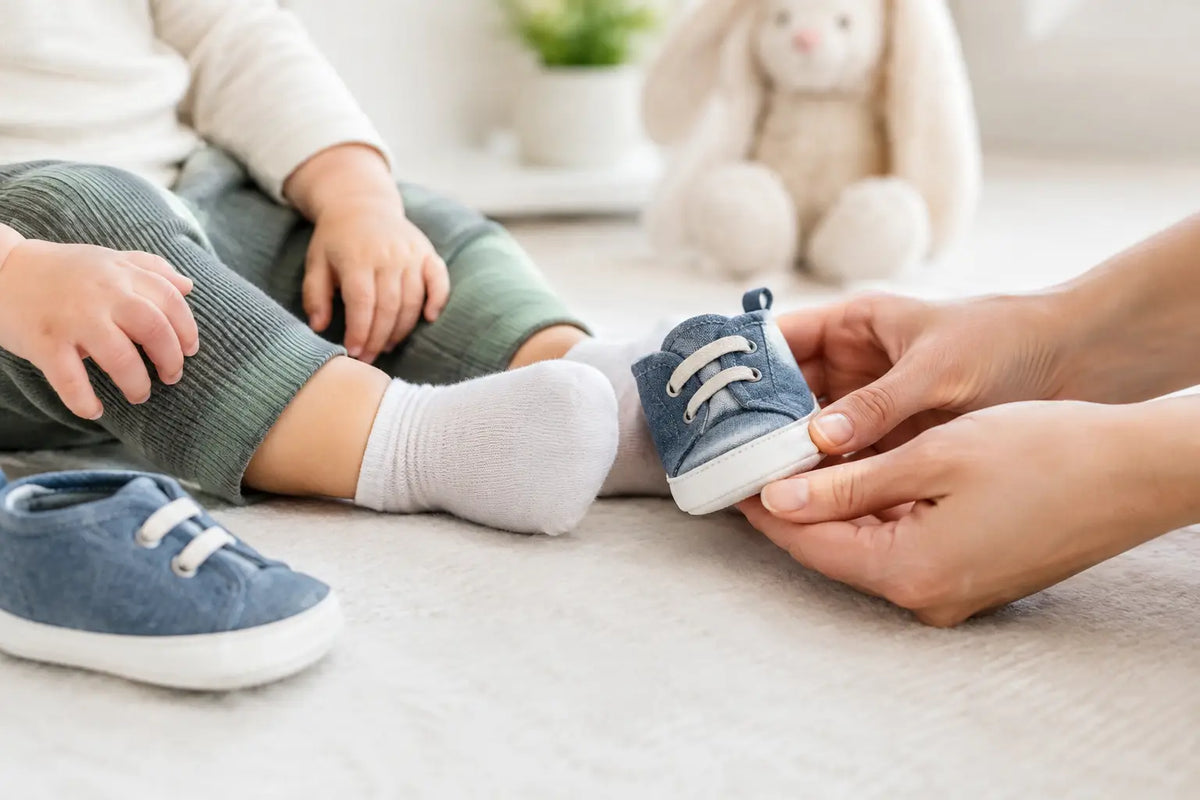
Once the shoes are on, check the fit while your child is sitting and again while they are standing or taking a few steps. Fasten straps or laces as they would be worn day to day.
Start at the heel. It should sit comfortably at the back of the shoe without lifting dramatically as your child moves. A small amount of movement can be normal, but the shoe should not slide off or rub around the ankle.
Next, feel for toe room by gently pressing the front of the shoe. You should be able to find the gap between the longest toe and the end. Avoid relying on a child curling their toes, as this can make a shoe seem roomier than it is. If possible, remove the shoe after a few minutes and look for red marks on the toes, sides of the feet or heels.
Check the width too. The upper should sit smoothly over the foot, without bulging at the sides or leaving deep marks. Equally, a shoe should not look baggy around the front. Babies with wider feet may be more comfortable in styles with a rounded toe box, soft uppers and adjustable hook-and-loop fastenings.
Choosing shoes for each stage
The best type of footwear changes as your child becomes more mobile. Before walking, socks, booties or soft-soled shoes are usually enough for warmth and protection. Bare feet indoors can be beneficial for allowing babies to feel the floor and move their toes freely.
For crawlers and early cruisers, look for soft, flexible soles with good grip. The shoe should bend easily at the front, where the foot naturally bends, rather than feeling rigid all the way through. Lightweight styles are generally easier for little legs to move in.
Once your child is confidently walking outdoors, choose shoes with a flexible, non-slip sole, a secure fastening and a rounded toe area. Leather, breathable textiles and other soft materials can be comfortable options, particularly in warmer conditions. In the UAE, breathable shoes and socks are especially helpful for keeping little feet comfortable during hot days, while closed styles can offer protection on family outings.
For sandals, the same sizing rules apply. Open toes do not mean a loose fit is acceptable. The heel should stay secure, the foot should sit within the sole rather than hanging over an edge, and adjustable straps should hold the shoe in place without digging in.
Do socks change the fit?
They can. Thick socks take up more space than lightweight cotton socks, so measure and try shoes on with the type your child will wear most often. For winter boots or occasion shoes, bring the intended socks along when checking the fit.
If shoes seem tight only with one particular pair of socks, changing the socks may solve the issue. If they are tight even with thin socks or bare feet, the shoe is too small or too narrow.
How often should you check shoe size?
During the first years, feet can grow in noticeable bursts. Check the fit every six to eight weeks for babies and early walkers, and at least every two to three months for toddlers. You may need to replace shoes sooner if you notice worn-out soles, toes pressing against the front, straps becoming difficult to fasten or red marks after wear.
Do not assume a shoe still fits because your child has only worn it a few times. Growth does not follow a neat schedule, and a previously roomy pair can become snug surprisingly quickly. Seasonal changes are another good prompt to remeasure, especially before buying sandals, school shoes or boots.
Common baby shoe sizing mistakes to avoid
Buying shoes to “grow into” is one of the most common mistakes. A little growing room is sensible, but an oversized shoe is harder to control and can rub as the foot moves around inside it.
Another is passing down heavily worn shoes. Hand-me-downs can be useful if they are still in excellent condition, but inspect the sole and inner footbed carefully. Shoes often mould to the previous child’s walking pattern, and uneven wear may not provide the best support or comfort for a new wearer.
It is also easy to focus only on length. A child with a wider foot may need a different style rather than simply a longer size. Look for roomy toe boxes and adjustable closures, and let comfort guide the final choice.
At Baby Life, choosing from practical baby and toddler footwear is easier when you have a current foot measurement and know the type of shoe your child needs for their next stage. A secure, flexible pair gives little feet the freedom to explore, whether they are taking first steps at home or heading out for a family day.
The best shoe is not necessarily the one with the longest wear time. It is the pair that fits comfortably now, leaves sensible room for growth and lets your child move with confidence.