How to Set Up a Nursery That Works Every Day

A nursery does not need to look like a showroom to feel special. The most useful rooms are designed around the moments that happen repeatedly at 2am: a nappy change, a feed, a quick clothing change and the careful return to sleep. Knowing how to set up a nursery means creating a calm, safe space that supports your baby and makes daily care easier for you.
For many new parents, the temptation is to buy every adorable item at once. Start instead with the essentials your family will use from the first week, then leave room to adjust once you know your baby’s routines. A thoughtfully planned nursery can grow with your little one, without becoming crowded from day one.
Start with the room, not the shopping list
Before choosing furniture or décor, take a few minutes to look at the room as it will work in real life. Notice where the door opens, where natural light falls and whether there are plugs, blinds or cords within reach. You will want a clear path from the door to the cot, especially for sleepy night-time checks.
Choose a room that can be kept comfortably cool and well ventilated. In UAE homes, this can mean checking that the air conditioning does not blow directly onto the cot and that the room remains comfortable through the night. Blackout curtains can help with bright mornings, but make sure any cords are secured well out of a child’s reach.
Aim for a layout with distinct zones: a sleep area, a changing area and a small feeding or settling spot. You do not need a large room for this. Even in a compact nursery, placing each essential within easy reach will make a noticeable difference during the newborn months.
How to set up a nursery with safe sleep at its heart
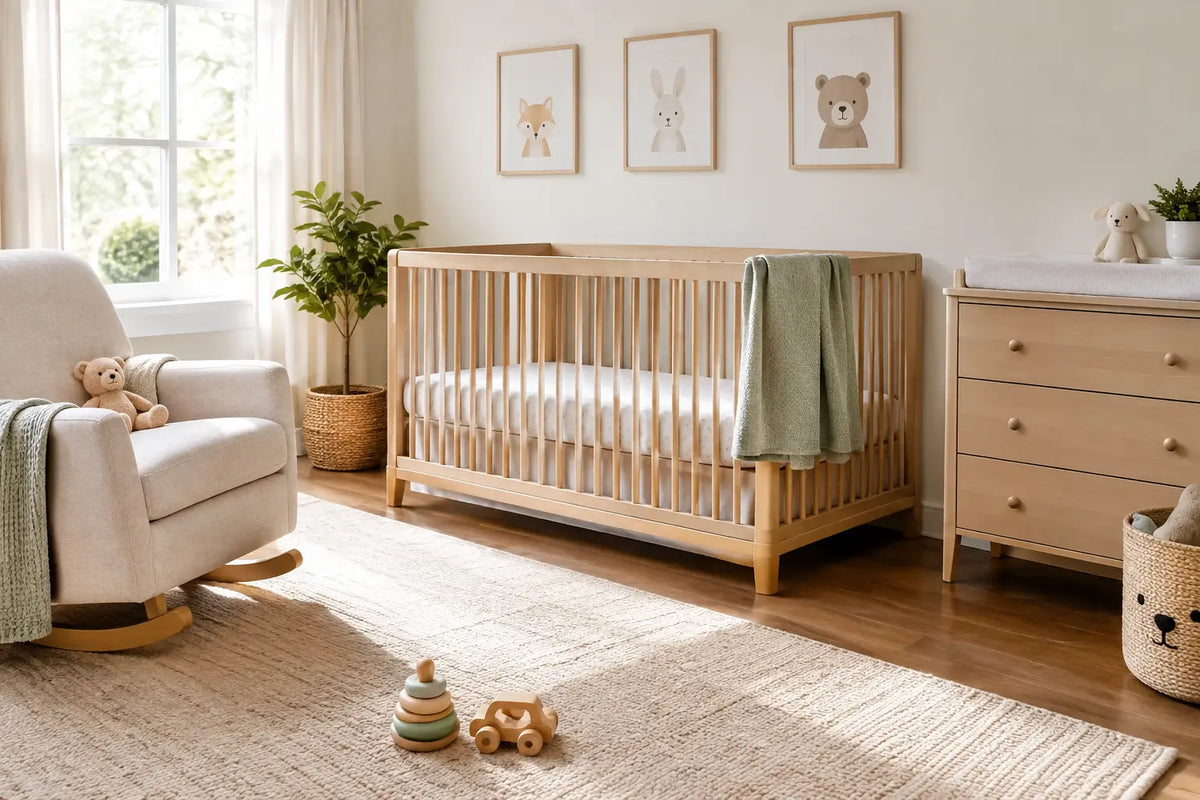
The cot is the centre of the nursery, so safety comes before style. Select a sturdy cot or bedside crib that meets current safety standards, with a firm, flat mattress that fits snugly. There should be no gaps around the edges where a baby could become trapped.
For sleep, keep the cot simple. Your baby needs a fitted sheet and appropriate sleepwear, with a suitable sleeping bag when age and size recommendations allow. Avoid pillows, duvets, cot bumpers, loose blankets, soft toys and positioners in the sleep space. While these items may look cosy, they are not suitable for unsupervised infant sleep.
Position the cot away from windows, radiators, lamps, shelves and hanging décor. It is also wise to avoid placing it directly beneath wall art or a mobile that could become loose. A dimmable night light can make feeds and checks easier without fully waking everyone up.
As your baby becomes more mobile, reassess the room regularly. Lower the cot mattress when they begin sitting or pulling up, and move furniture away from anything they may use to climb. Nursery safety is not a one-time task. It changes as your child does.
Make nappy changes quick and organised
A dedicated changing station saves time when your hands are full. A changing table, dresser with a secured changing mat or a compact changing unit can all work well. The best choice depends on your available space and whether you want furniture that can be repurposed as your child grows.
Keep everyday supplies at arm’s reach: nappies, wipes, nappy cream, cotton pads, spare vests and a change of clothes. Use drawer dividers, baskets or labelled containers so you can find what you need without searching through a pile of supplies. Keep medicines, nail clippers, creams and other small items in a higher drawer or locked storage.
A lidded nappy bin placed close by is practical, but it should not be the only plan for controlling odours. Empty it frequently and keep spare liners ready. A small laundry basket for soiled clothes also helps keep the rest of the nursery tidy.
Never leave a baby unattended on a changing surface, even for a moment. If you have forgotten something, bring your baby with you or place them safely in their cot first.
Choose storage that makes sense at 3am
Babies have tiny clothes and surprisingly large amounts of kit. Good storage is less about having more cupboards and more about making frequently used items easy to see and reach.
Reserve the most accessible drawers for newborn sizes, nappies and sleepwear. Store larger sizes, seasonal clothing and duplicate supplies higher up or in labelled boxes. A wardrobe rail can be helpful for special outfits, while drawer organisers prevent socks, bibs and muslins from disappearing into the corners.
Open baskets are useful for clean muslins, blankets used only during supervised awake time, and toys. Just avoid overfilling them. A nursery feels calmer when there is a simple home for each category, rather than one large basket for everything.
It also helps to create a small replenishment routine. Once a week, check nappy stock, wipes, laundry detergent and baby toiletries, then restock before they become urgent. Buying everyday nursery and care essentials together can make this part of family life far more manageable.
Add a comfortable feeding and settling corner
Whether you plan to breastfeed, express, combination feed or bottle feed, a comfortable seat is one of the most valuable nursery additions. Choose a supportive chair with armrests if possible, and place a small table nearby for a bottle, water, burp cloth and phone.
A maternity or nursing pillow can offer extra support during feeds, particularly in the early weeks when both you and baby are finding a comfortable position. Keep a light layer nearby for yourself, as night feeds can feel chilly in an air-conditioned room.
Think about what will make the space restful for you, too. A soft lamp, a washable rug and a few meaningful prints can make the nursery feel warm without overloading it with visual clutter. Calm colours are popular, but there is no rule that says a nursery must be beige or pastel. Choose a colour palette you genuinely enjoy, then keep larger furniture neutral if you want it to last through changing tastes.
Plan for the nursery to grow with your child
The newborn stage moves quickly. Furniture with a longer lifespan often offers better value and reduces the need to redesign the room every year. A dresser can continue to hold clothes after it stops being used for nappy changes, and adjustable cot beds can support a child beyond infancy when used according to the manufacturer’s guidance.
Leave some floor space free for tummy time and later play. You do not need to fill the room with toys before your baby arrives. A small selection of age-appropriate sensory toys, books and a soft play mat is enough at first. Rotate toys as your child grows to keep the space engaging and easier to tidy.
Anchor tall furniture securely to the wall, especially drawers and wardrobes. As toddlers begin exploring, they will pull, climb and test every handle within reach. Childproofing becomes more effective when you anticipate this stage before it arrives.
Keep comfort practical
A beautiful nursery should still be easy to clean. Choose washable covers, wipeable surfaces and curtains or blinds that are simple to maintain. For rugs, a low-pile washable option is usually more practical than something thick that traps dust.
Temperature, light and sound all affect how the room feels. A room thermometer can help you judge whether your baby is dressed appropriately for sleep. Some families find white noise helpful for settling, while others prefer a quiet room. It depends on your baby and your household, so treat these additions as optional supports rather than must-haves.
When selecting nursery furniture, feeding accessories, clothing and care essentials, focus on items that solve a real daily need. Baby Life brings these practical categories together, making it easier to prepare for your baby without turning nursery planning into a long list of separate errands.
Give yourself permission to finish the nursery gradually. Set up the safe sleep space, changing essentials and feeding corner first, then live with the room for a few weeks. The best nursery is not the one with the most accessories. It is the one that helps your family feel rested, prepared and close to your baby.