Postpartum Recovery Essentials Checklist for Home

The first days at home with a new baby can feel surprisingly busy: feeds blur into night-time nappy changes, visitors may arrive with kind intentions, and your own recovery needs can slip to the bottom of the list. A thoughtful postpartum recovery essentials checklist helps protect a little more comfort, privacy and rest when you need them most.
Recovery looks different after every birth. Vaginal birth, a planned or emergency caesarean birth, breastfeeding, formula feeding and the presence of stitches or complications all change what is useful. Start with the basics, then tailor your supplies to your care team's advice and your own experience.
Postpartum Recovery Essentials Checklist: Start With Comfort
Set up a small recovery basket beside the bed or sofa, rather than storing everything in the bathroom. In the early weeks, the right item within reach is often far more helpful than a perfectly organised cupboard.
For bleeding after birth, choose maternity pads designed to be soft and absorbent. Stock more than you think you will need, along with comfortable, high-waisted maternity knickers that will not rub against tender areas or a caesarean incision. Avoid tampons until your healthcare professional confirms they are safe to use.
A peri bottle can make toileting gentler after a vaginal birth, especially if you have soreness or stitches. Some parents also appreciate cooling pads or witch hazel pads for temporary relief, while a supportive cushion can make sitting easier. Ask your midwife or doctor before using medicated creams, sprays or herbal products, as the right choice depends on your symptoms and medical history.
For pain relief, follow the guidance given by your healthcare team. Keep water, easy snacks and any prescribed medicines close by, particularly if getting up is uncomfortable. A loose pyjama set, soft robe and non-slip slippers may seem simple, but they make frequent feeds and night-time trips feel more manageable.
Support for a Caesarean Recovery
A caesarean is major abdominal surgery, so comfort and access matter even more. High-waisted underwear and loose clothing that sit well above the incision can prevent unnecessary pressure. A firm but comfortable pillow is useful for supporting your abdomen when you cough, laugh or feed your baby.
Place daily essentials at waist height where possible. Reaching up, bending repeatedly or carrying heavy items can be difficult at first. A bedside caddy, water bottle with a straw and a changing station on the same floor can reduce unnecessary movement.
Keep the incision clean and dry according to your medical team's instructions, and attend all follow-up appointments. Increasing pain, spreading redness, swelling, discharge, fever, heavy bleeding, chest pain or shortness of breath need prompt medical advice. Trust your instincts if something does not feel right.
Feeding Essentials That Care for You Too
Whether you breastfeed, combination feed, express or formula feed, feeding is easier when your body has support. A nursing pillow can help bring baby to a comfortable height, reducing strain through your shoulders, neck and arms. It is a support tool, not a requirement: some parents prefer ordinary pillows arranged around them.
If you are breastfeeding, nursing bras or soft sleep bras, breast pads and nipple care products can make frequent feeds more comfortable. Leaks are common, particularly in the early weeks, so having spare pads and a clean top nearby can save a late-night scramble. If feeding is painful, your nipples are damaged, or baby is not feeding well, seek support early from a qualified healthcare professional or lactation consultant.
If you are expressing, prepare a clean, practical station with your pump parts, storage containers, labels and a water bottle. Formula-feeding families may find it helpful to keep bottles, teats, formula and sterilising equipment together in one easy-to-clean area. The best feeding setup is the one that supports your baby’s growth and your family’s wellbeing.
Everyday Hygiene and Care Supplies
You do not need a hospital-sized stockpile, but running out of essentials can be stressful when leaving the house feels like a major task. Keep a simple reserve of daily items in your bathroom and recovery basket:
- Maternity pads, high-waisted knickers and a gentle peri bottle
- Soft toilet roll, fragrance-free wipes and hand sanitiser for convenient use
- A thermometer, any prescribed medicines and a note of your care team's contact details
- Comfortable clothes, spare breast pads and a lightweight blanket
- A large water bottle and nourishing, ready-to-eat snacks
Create Two Rest Stations, Not One Perfect Nursery
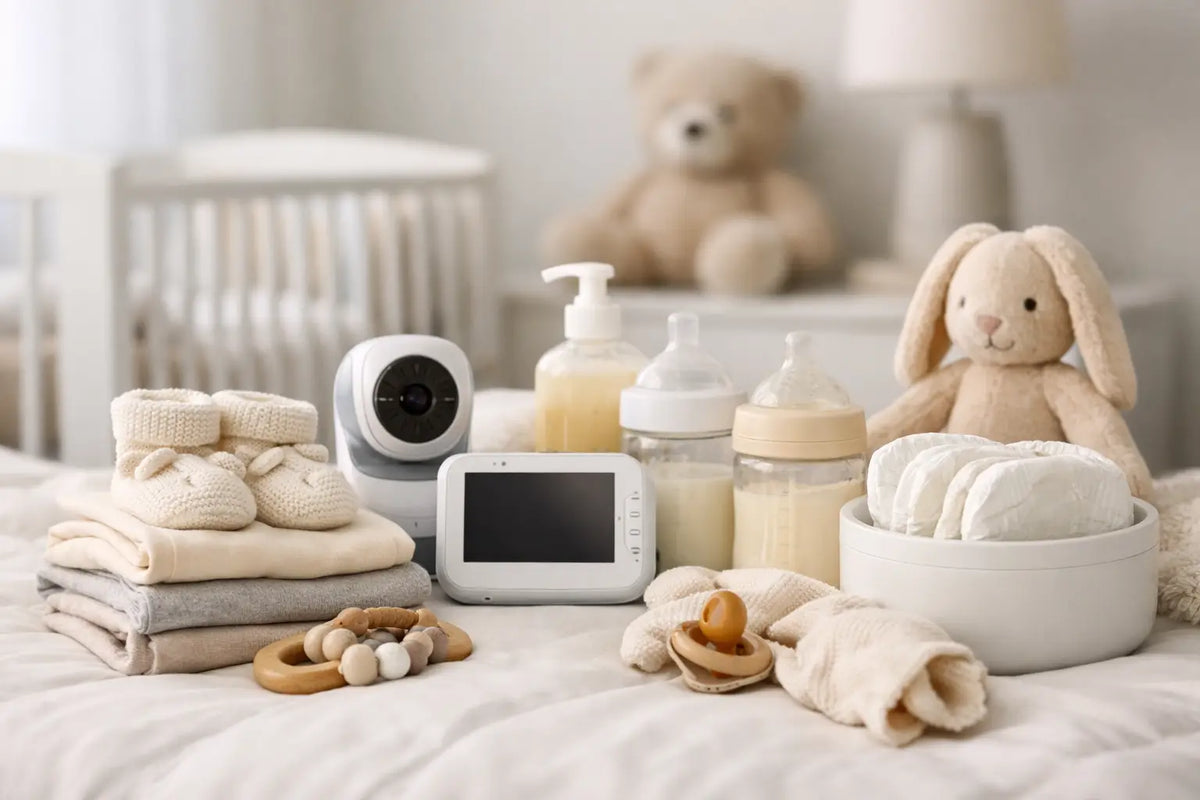
Many new parents focus on completing the nursery before birth, then discover that recovery happens mostly where they sit and sleep. Create a recovery station in your bedroom and another in the main living area. Each can hold water, snacks, a mobile phone charger, burp cloths, muslins, nappies, a spare babygrow and your personal care essentials.
This approach is especially useful in UAE homes where air conditioning can make one room much cooler than another. Keep a light layer nearby for yourself and dress baby appropriately for the indoor temperature rather than the heat outside.
A soft maternity or nursing pillow can support your lower back while sitting, but change positions regularly if you can. Rest does not always mean sleeping. Lying down with your feet up, handing baby to a trusted adult after a feed, or taking ten quiet minutes while someone else holds the baby all count.
What to Prepare Before Baby Arrives
The most useful preparations are usually practical rather than elaborate. Wash your comfortable clothes, arrange a few freezer meals or easy cupboard options, and make sure you know how to order household basics without a last-minute rush. If family or friends ask how they can help, give them a specific job: bring lunch, run a load of washing, hold the baby while you shower, or pick up nappies.
It also helps to set expectations before birth. Decide who will manage visitors, how you will protect quiet feeding time, and who will keep track of appointments or prescriptions. You are allowed to say no to guests, postpone replies and keep your home calm.
Baby Life brings maternity support, feeding essentials, baby care and everyday nursery supplies together, making it easier to prepare the items your household will use repeatedly in those first weeks.
Your Emotional Recovery Belongs on the Checklist
Postpartum care is not only physical. Hormonal changes, lack of sleep, feeding challenges and the adjustment to caring for a newborn can leave you tearful, overwhelmed or unlike yourself. The "baby blues" are common in the first days, but persistent sadness, anxiety, frightening thoughts, intense agitation or difficulty coping deserve professional support.
Tell a partner, family member, midwife, doctor or trusted friend how you are feeling. If you think you may harm yourself or your baby, seek emergency help immediately and do not stay alone. Asking for help is a caring step for both you and your child.
Your checklist does not need to make postpartum life perfect. It simply needs to remove a few obstacles between you and the care you need. Keep your supplies close, accept practical help, and give yourself permission to recover at your own pace.