When a Maternity Support Belt for Pregnancy Helps
By the end of a busy day, a growing bump can make standing at the kitchen counter, walking through the shops or keeping up with older children feel noticeably harder. A maternity support belt for pregnancy is designed to offer gentle, adjustable support around the lower abdomen and back, helping many expectant mothers feel more comfortable during everyday movement.
It is not a pregnancy essential for everyone, and it is not a treatment for pain that needs medical attention. But when used thoughtfully, the right belt can be a practical addition to your maternity wardrobe - especially during the second and third trimesters, when your changing posture and bump may place more strain on your lower back and pelvis.
What a maternity support belt for pregnancy does
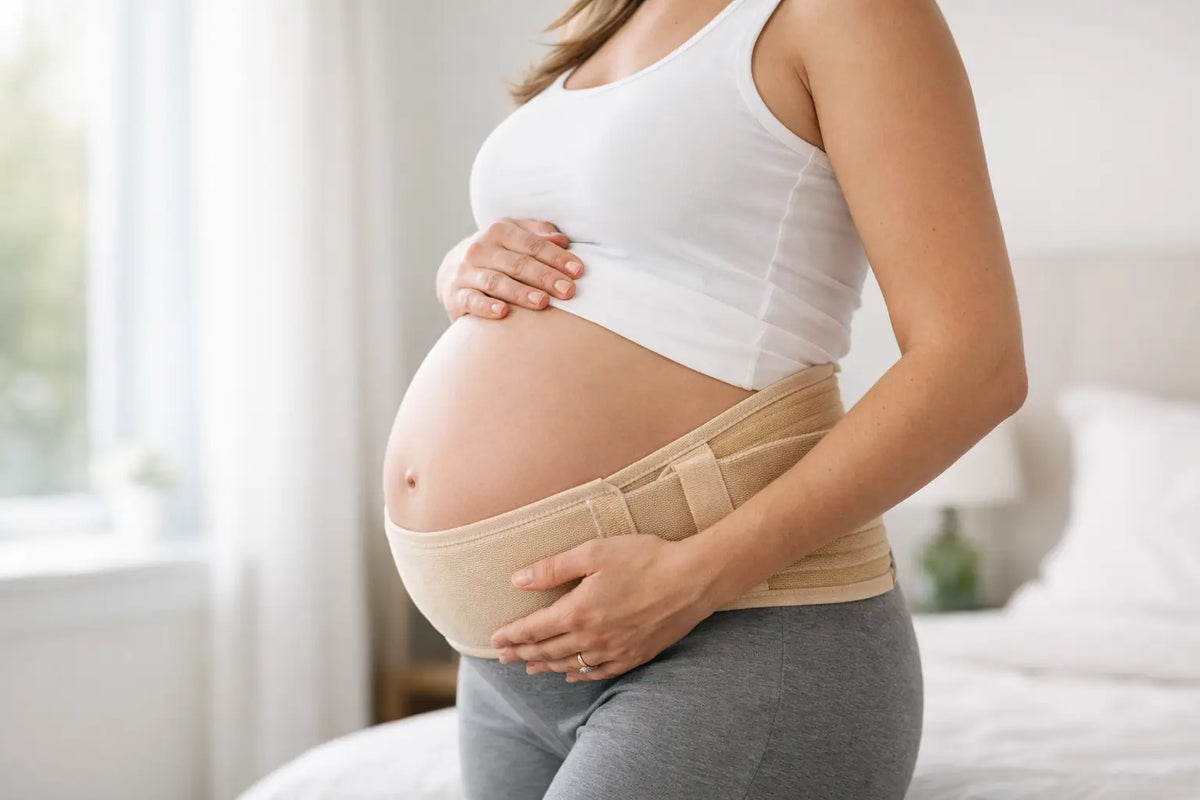
A maternity support belt sits beneath the bump and fastens around the waist or hips. Rather than squeezing the abdomen, it is intended to gently lift and distribute some of the weight of a growing bump. Many designs also include a wider back panel that provides light support across the lower back.
This extra support can make day-to-day tasks feel more manageable. You may notice it most while walking, standing for longer periods, doing light household jobs or travelling. Some parents also find a belt useful when they are caring for a toddler during pregnancy, as it can make frequent bending and lifting feel less tiring.
The benefit is usually comfort, not correction. A support belt cannot change the course of pregnancy, cure pelvic pain or replace tailored advice from a midwife, GP, obstetrician or physiotherapist. Think of it as one comfort tool alongside supportive footwear, sensible rest, gentle movement and a pregnancy pillow for recovery at home.
When might a support belt be useful?
A belt may be worth considering when your bump starts to feel heavy during normal activities or when standing leaves your lower back feeling fatigued. Some women prefer to use one only for a walk, a shopping trip or a day on their feet, while others wear it for short periods at work.
It can also be useful if you find that your posture changes as pregnancy progresses. As the body naturally adjusts to carry more weight at the front, the lower back may arch more than usual. A well-fitted belt can provide a reassuring feeling of support and encourage a more comfortable position while you move.
However, more support is not always better. If you are comfortable without a belt, there is no need to wear one simply because you are further along in pregnancy. A belt should make daily life easier, not become something you feel unable to manage without.
Speak to your maternity care team first if pain is persistent
New, severe or ongoing pain deserves proper advice. Contact your maternity care provider if you have sharp pain, pain that affects your ability to walk, numbness, swelling, contractions, bleeding, dizziness or any concern about your baby’s movements. If you have pelvic girdle pain, a physiotherapist with pregnancy experience can advise on movement, pacing and whether a belt is suitable for your individual needs.
A support belt may help some people with mild discomfort, but it should never be used to push through pain or to continue activities that your body is telling you to stop.
How to choose the right maternity support belt
The best choice depends on your bump shape, daily routine and the type of support you find comfortable. A simple under-bump band may suit occasional wear, while a design with a broad adjustable back panel can be more helpful for longer periods of standing or walking.
When comparing maternity support options, focus on fit and function rather than choosing the firmest belt available. Look for these practical features:
- Adjustable fastening, so the belt can adapt as your bump grows.
- Soft, breathable fabric that feels comfortable against sensitive skin, particularly in warm weather.
- A supportive under-bump section that lifts gently without pressing into your stomach.
- A discreet profile if you plan to wear it beneath loose dresses, tunics or workwear.
- Clear sizing guidance based on your current measurements, rather than your pre-pregnancy clothing size alone.
A belt with plenty of adjustment is often the more flexible choice. Pregnancy changes quickly, and a fit that feels right at 24 weeks may be too loose or too restrictive several weeks later. Check that the fastening is easy to reach and adjust independently, particularly if you expect to put it on during the working day or while travelling.
How to fit and wear it comfortably
Start by reading the manufacturer’s sizing and fitting instructions. In general, a maternity belt should sit low, supporting underneath the bump, with the back section positioned across the lower back. It should feel secure but never tight.
Put it on while standing in a relaxed, upright position. Fasten it gently, then walk around the room, sit down and take a few deep breaths. If it digs in, rides up, limits your breathing or leaves deep marks, loosen it or try a different size or style. You should be able to move normally and comfortably.
It is usually best to begin with short periods of wear. Try it for a walk or a task that normally causes fatigue, then notice how your body feels during and afterwards. This gradual approach helps you work out whether the belt is useful for you without relying on it all day.
Many maternity care professionals advise avoiding prolonged, continuous wear unless you have been given individual guidance. Taking regular breaks gives your muscles the chance to work naturally. Remove the belt for rest, sleeping and any time it feels uncomfortable.
Pair support with small daily adjustments
A belt works best as part of a wider comfort routine. Supportive, cushioned shoes can reduce strain when walking. Sitting with your feet supported, changing position regularly and avoiding carrying heavy bags on one shoulder may also help. If you are lifting an older child, bend at the knees, hold them close to your body and ask for help when you can.
At home, a pregnancy pillow can make side sleeping and resting more comfortable, while a supportive nursing bra may help if changing breast size is adding tension through your shoulders and upper back. These small choices can make a real difference because pregnancy discomfort often comes from several everyday pressures rather than one single cause.
Common questions about pregnancy support belts
Can I wear a maternity belt all day?
Usually, a belt is most useful for selected activities rather than all-day wear. Follow the product guidance and advice from your healthcare professional. If wearing it for longer makes you feel restricted, sore or overly dependent on the support, take it off and reassess.
Can I wear it directly on my skin?
This depends on the material and your comfort. Many people prefer a soft layer of clothing beneath the belt to reduce rubbing and make it easier to wash after regular use. If you have sensitive skin, choose a breathable fabric and stop using it if irritation develops.
Will a belt help with pelvic girdle pain?
It may help some women feel more supported, but pelvic girdle pain varies widely. A maternity physiotherapist or healthcare professional can assess your symptoms and suggest the safest approach for you. Do not assume that a tighter belt will provide better relief.
A maternity support belt is there to make the practical parts of pregnancy feel a little kinder - the school run, the supermarket queue, the evening meal and the walk that clears your head. Choose gentle support, listen to your body and give yourself permission to slow down when comfort calls for it.